

During the first day of the 2nd Digital Forum, experts outlined the main trends in the global IT sphere, exchanged experience of digital transformation in public governance, and discussed the influence of technologies on mega-city management.
One of the main events was the statement made by Deputy Prime Minister and Chief of the Government Staff of the Russian Federation Dmitry Grigorenko at the High-Level Plenary Session titled The AI Race: One Set of Rules or Many? He spoke about digital transformation achievements in Russia and the importance of developing an international framework for regulating artificial intelligence.
“Regulations apply within national borders, but AI is a technology that knows no boundaries. That is why the international community needs to develop a common approach to AI regulation. Work in this direction is already underway,” Dmitry Grigorenko said.
The forum began with a business IT breakfast titled Digital Childhood Without Borders: Best International Practices for Protecting Child Safety Online.
The discussion centered on age restrictions, personal data protection, digital literacy, fraud prevention, and emerging risks associated with artificial intelligence. Participants presented practical solutions that are already being implemented across various countries.
Another key topic discussed at the breakfast was the idea of creating a Global Alliance for the Protection of Children in the Digital Environment, – an international initiative aimed at uniting governments, technology companies, and expert and civil society organizations to share expertise and implement joint projects.
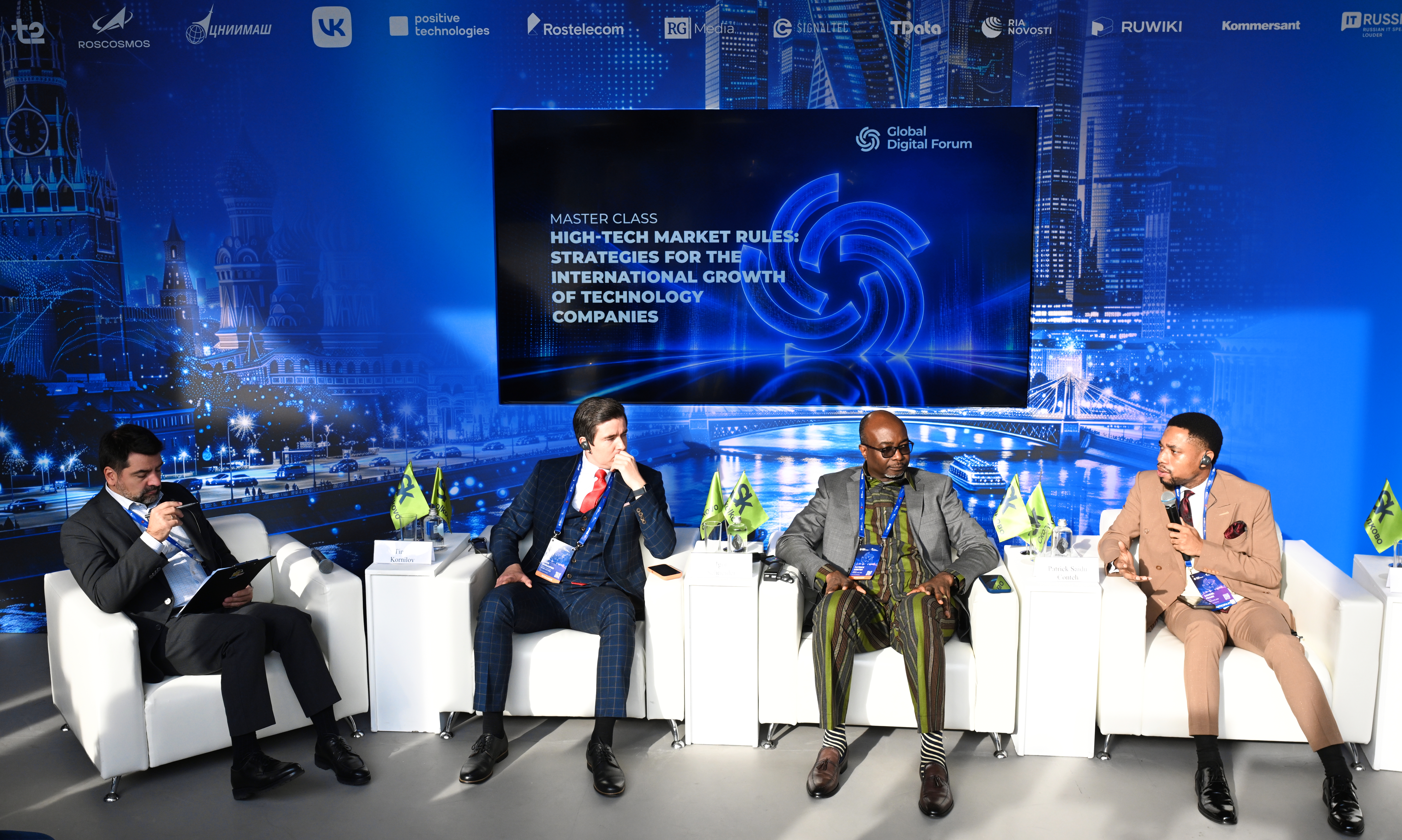
The central theme of the day was digital sovereignty and internet governance. During the round table on Practices Of Implementing Digital Sovereignty: National Strategies, Legislation And Global Experience, experts outlined the key trends of digital sovereignty in Africa – data storage, cybersecurity, infrastructure and energy. They agreed that digital sovereignty means neither self-sufficiency nor isolation.
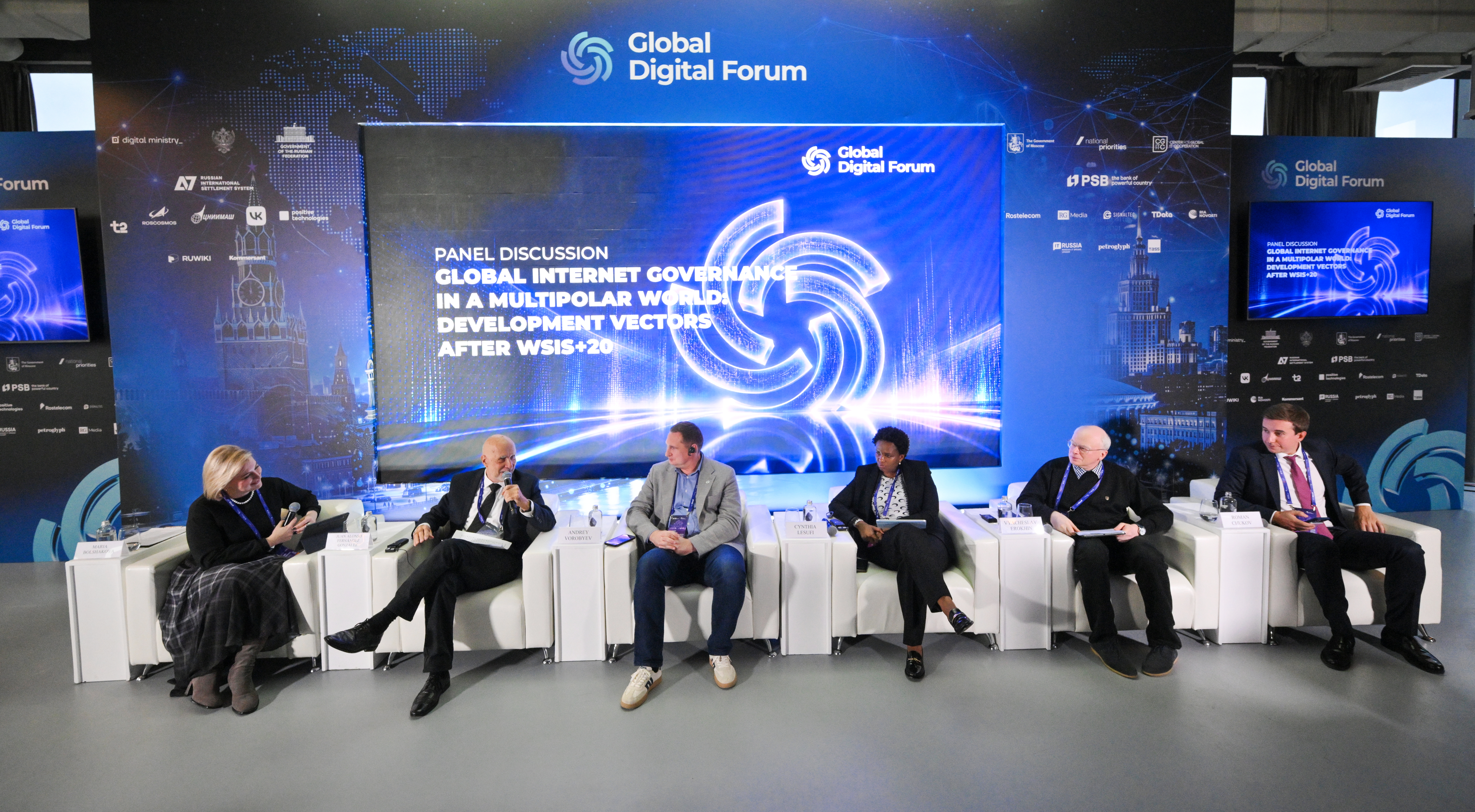
That issue also featured at the panel discussion Global Internet Governance in a Multipolar World: Development Vectors after WSIS+20. Experts discussed the importance of internet and AI governance, as well as contradictions in the system of global internet government. They emphasized the need for an inclusive approach combining governments, businesses, civil society and professionals.
Another key issue of the first day was a responsible development of AI in the media space.
During a session titled The Age of Total Digital: Distribution, Algorithms, and Generative AI in the Newsroom, experts discussed how platform algorithms and smart feeds are reshaping the journey content takes to reach readers, the role of artificial intelligence in news production, and how media websites are faring against competition from Telegram channels and neural networks.
Alexander Pavlov, Head of Online Operations at Kommersant Publishing House, noted that the audience still wants a human touch. “In journalism, that means plain, straightforward language. Many business publications – in Russia and elsewhere – face a real challenge here, because they struggle to explain complex things in simple terms,” he said.
Experts agreed that that artificial intelligence cannot replace a human being – least of all a journalist.
Participants in the panel discussion Humans Need Humans: Trust in Media in the Age of AI explored the role of critical thinking in modern content consumption and identified the professional journalistic functions that algorithms cannot replace.
During the panel discussion AI in Media Production: Film, Advertising, Platforms, discussed the way AI is changing this sphere and why the personnel of various companies don’t trust it so far.
CEO of Ionz Creative Digital Giri Maulana noted that AI can replace people, thereby reducing the number of personnel, but there should be limits to AI’s involvement.
AI makes production more cost-efficient, but it is still just a tool, and it is necessary to set limits. AI must be our helper, an assistant in the creative process, he said.
When discussing digital assets during the panel discussion The Value of a Name: Domain as a Digital Asset, experts explored the risks companies face due to the lack of clear mechanisms for working with available domain names and insufficient attention they give to protecting their domain names.
TCI Business Development Director Marina Brik also addressed the pressing issue of domain name snatching following registration expiry, citing the example of Belarus and Uzbekistan, which are using domain auctions.
VK Head of IT Projects Alexandra Pashko spoke about user-friendliness, an internal criterion that large enterprises use to evaluate domains.
Another issue discussed on the first day of the forum was the development of urban infrastructure. The panel discussion The City in 3D: How Digital Twins Are Transforming Urban Life focused on digital replicas of cities used for making long-term development and modeling plans in transport, and monitoring the environment. They noted that about 1,200 such models created throughout the world were tailored to regional features.
Representatives of Russia and Southeast Asian nations exchanged expertise in digital government. They discussed ways to establish an ongoing exchange of knowledge, spanning educational programs and joint pilot projects. The discussion took place at the round table Russia – Southeast Asia: E-Governance Knowledge Sharing.
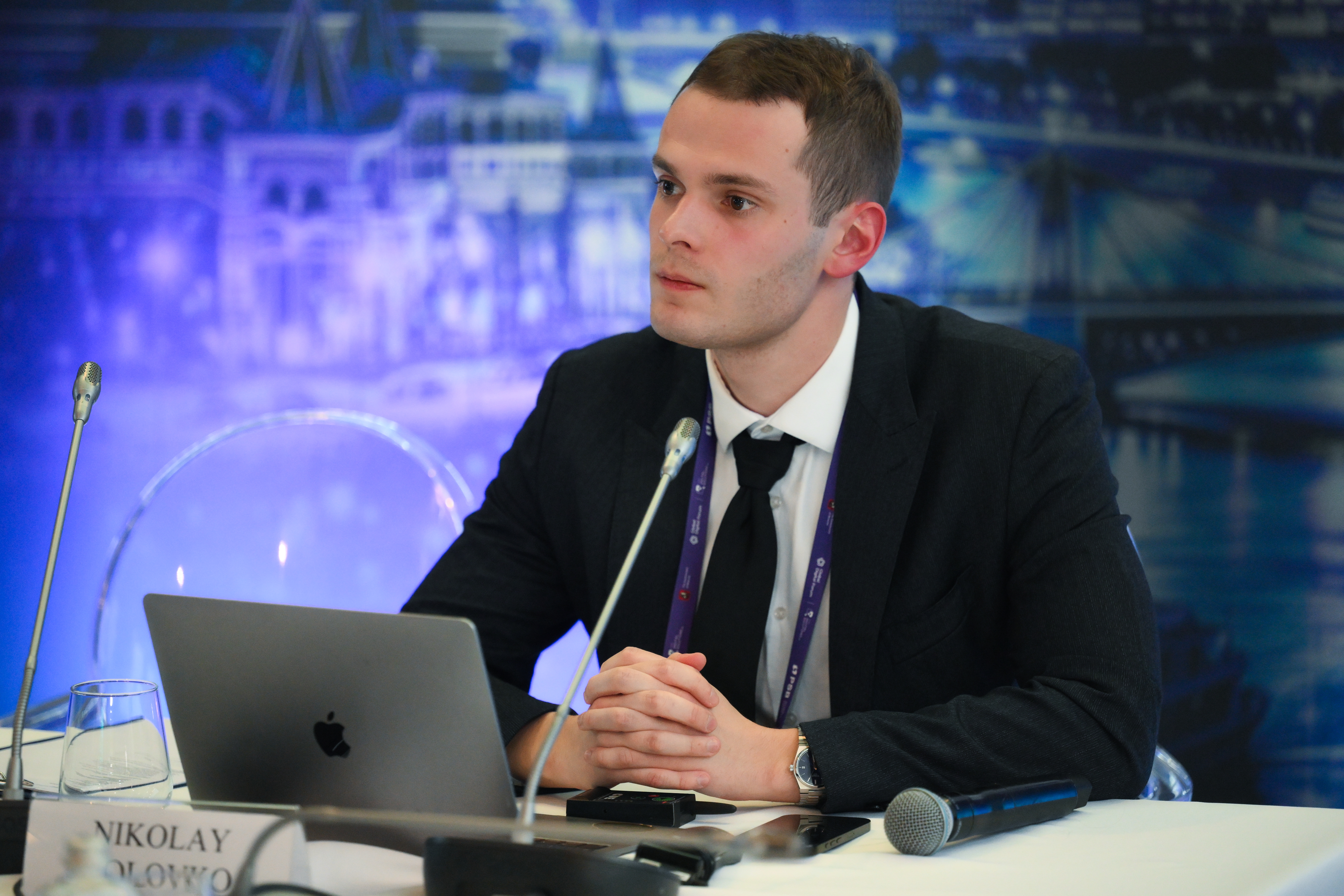
The experts taking part in the workshop Projects across Economic Sectors: Current Challenges and Opportunities for Cooperation with African Countries discussed digital transformation in the key industries and promising solutions for African countries. Nikolay Golovko, Lead Expert of the Center for African Studies at HSE University, outlined governments’ expectations from digital transformation.
On the positive side, there are cuts in administrative costs and higher efficiency of public resource management. The participants highlighted the issues of digital sovereignty, infrastructure development, and the training of industry professionals.
The first day of the forum concluded with a statement made by Evgeny Chereshnev, Senior Vice President at AFK Sistema, during his visionary lecture, AI Agent Economy: What Happens When AI Takes the Lead.
Chereshnev is convinced that in the age of artificial intelligence, a unique selling proposition (USP) is about the ability to keep generating new USPs – to produce things no one else has thought of yet.
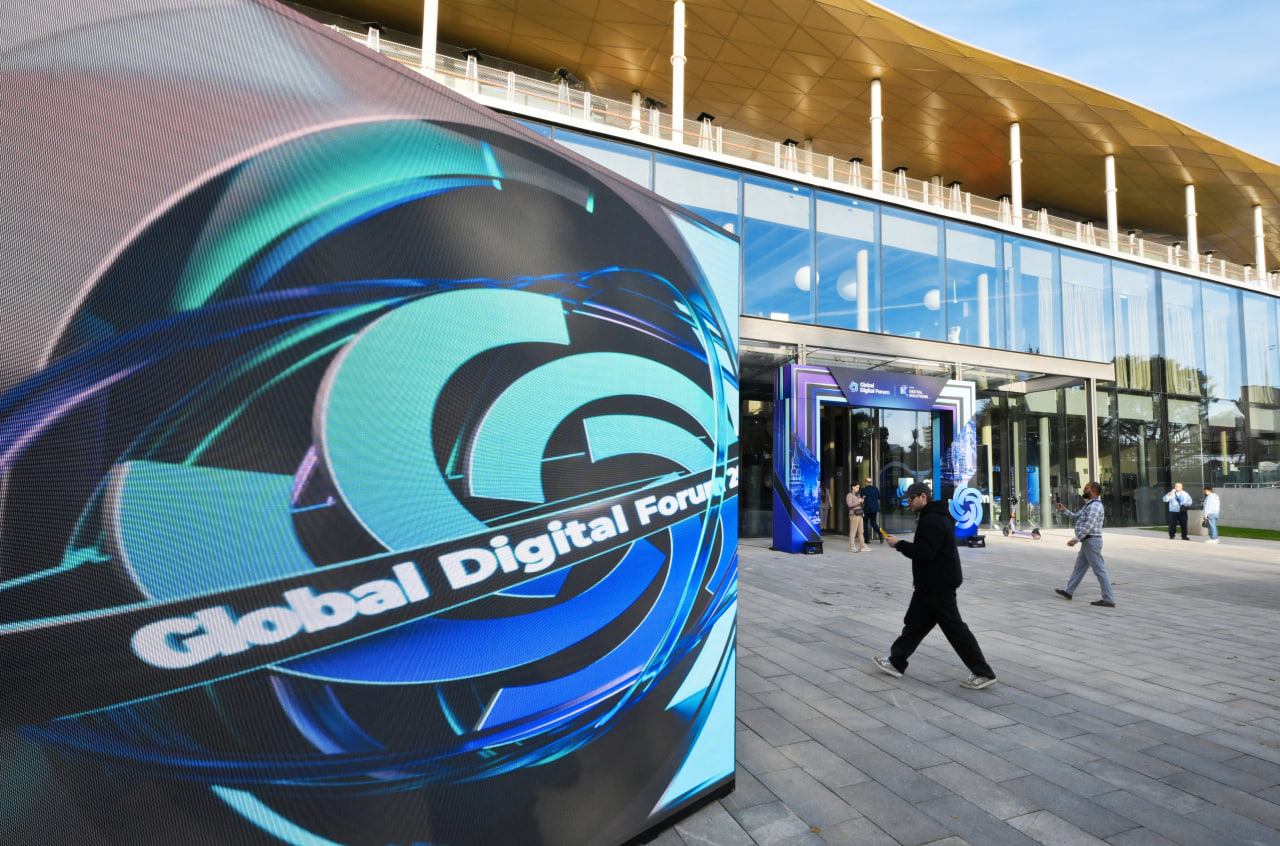
The Global Digital Forum 2026 is taking place from October 8 to 10 at the Mechta complex in Gorky Park in Moscow. It has brought together delegates from 120 countries in Africa, Asia, the Persian Gulf, Latin America and Europe.
The Forum is held with the support of the Russian Government, the Ministry of Digital Development, and the Russian Foreign Ministry. Forum partners include the Moscow Government (General Partner), Bank PSB Public Joint-Stock Company (Strategic Partner), А7 Russian International Settlement System (Special Partner), VKontakte (Official Partner), Roscosmos and the TsNIIMash rocket and spacecraft scientific center (Space Partners), RIA Novosti (General Media Partner), and Kommersant Publishing House (General Information Partner). Other forum partners are Russian companies Positive Technologies, Ruwiki, Signaltec, TData and Petroglyph. The forum is operated by National Priorities and NPO Center for Global IT-Cooperation.