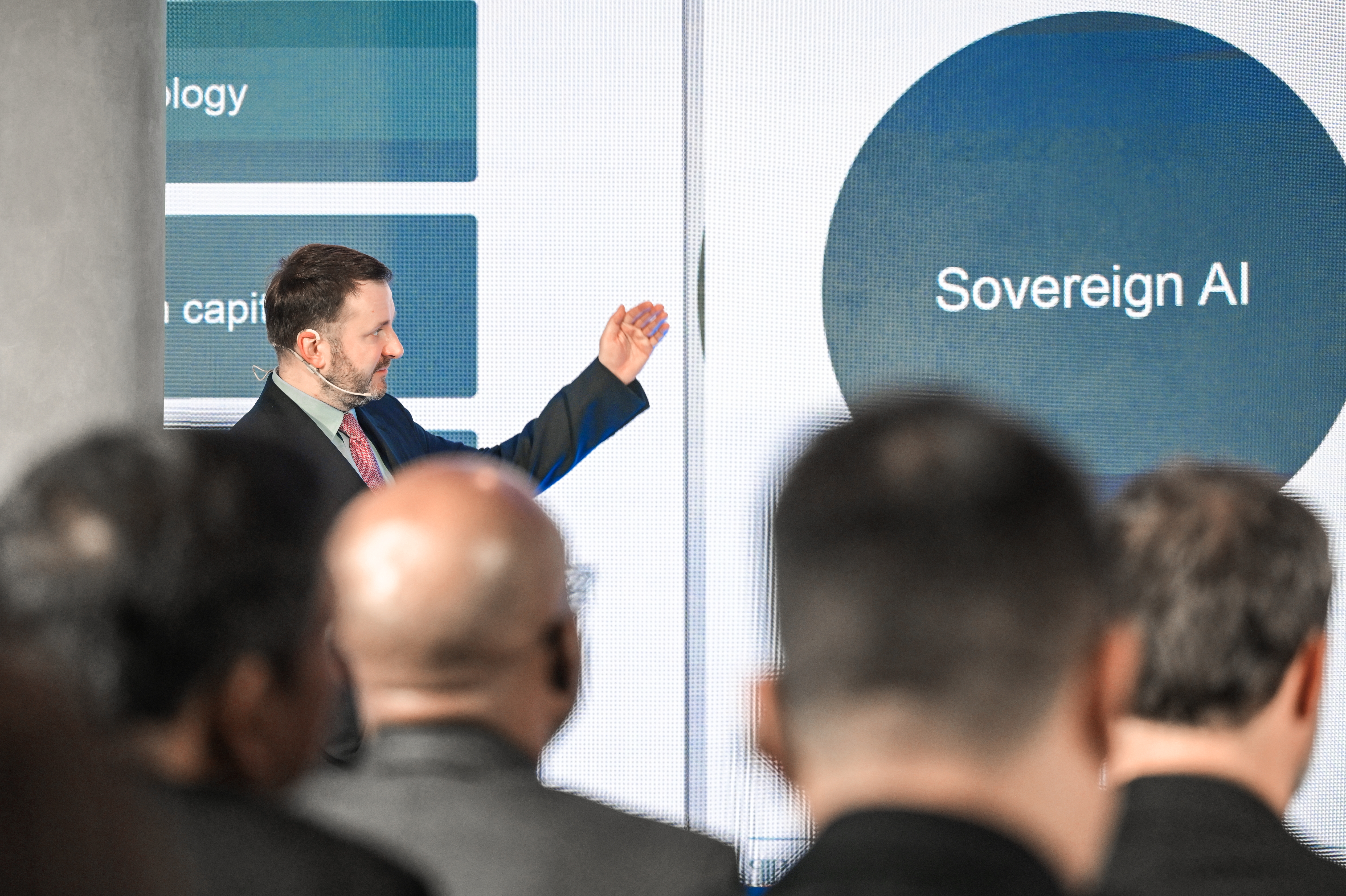


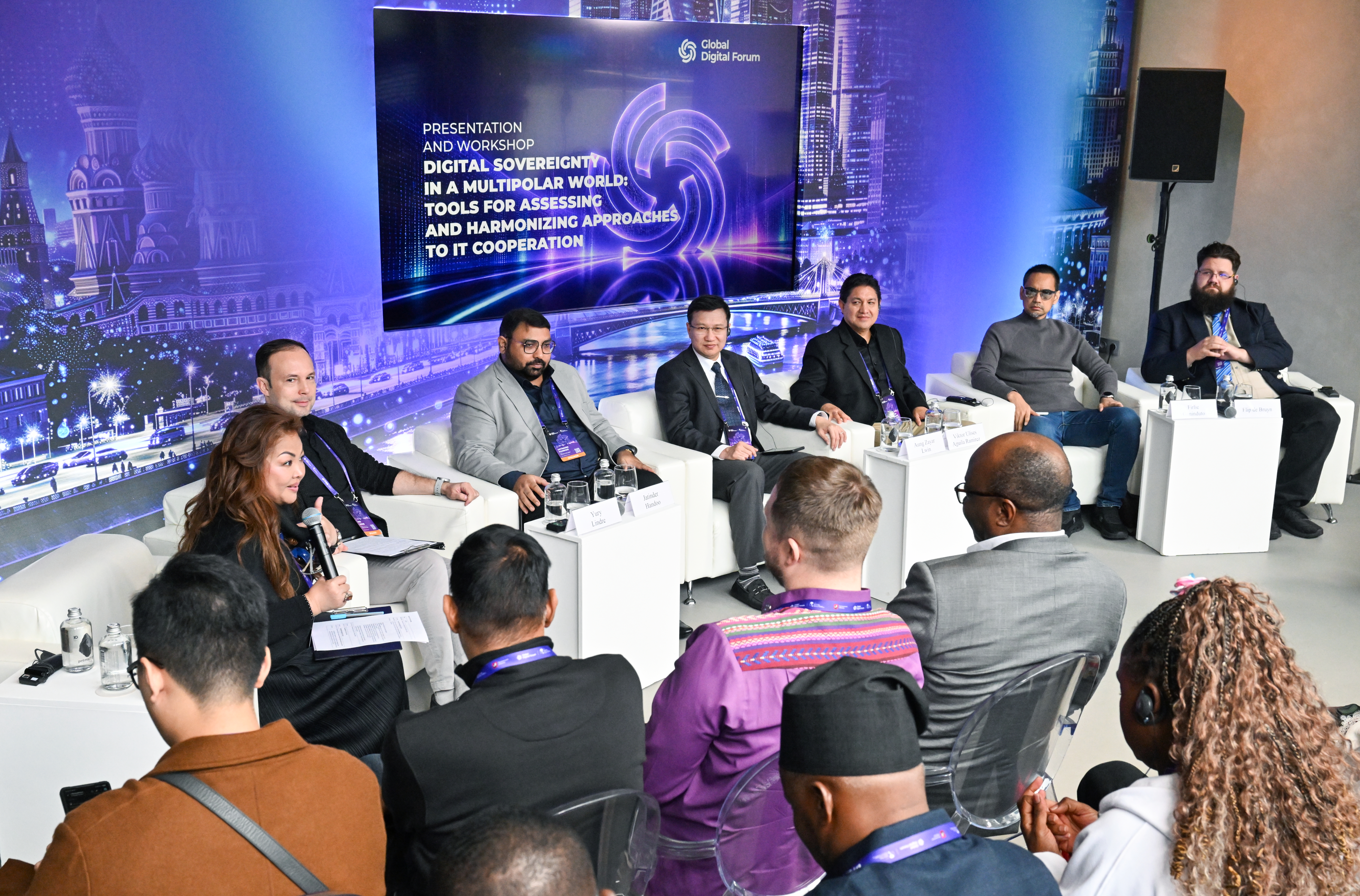
As the world moves toward multipolarity, digital sovereignty is becoming both a key to success and a vital strategic asset for countries. Cristina Amor Maclang, co-founder of the International Digital Economies Association (iDEA) and GeiserMaclang, noted that the presentation titled “Digital Sovereignty in a Multipolar World: Tools for Assessing and Harmonizing Approaches to IT Cooperation” was highly relevant to most GDF participants, given that China and the United States are home to 90 percent of the world’s data centers.
Ensuring the resilience of digital infrastructure and maintaining control over data and technology require objective tools for assessing national capabilities. One such tool could be the universal index of national digital sovereignty presented by Deputy CEO for Analytics and International Affairs at the Russian Association for Electronic Communications (RAEC) Yury Lindre. He noted that 117 countries had been assessed by the study. “Russia ranks third, after China and the United States, but tops the sovereignty from external influence rankings,” the expert said.
Yury Lindre also presented BRICS countries’ rankings and discussed opportunities to expand the study by including ASEAN member states.
The RAEC Deputy CEO also identified a shortage of skilled professionals as the main obstacle to digitalization in African countries. He said Russia was ready to help address these challenges and to improve the specialists’ skills across the continent.
“African countries are not on the top 15 list, but we aim to strengthen digital sovereignty through international cooperation, among other avenues,” Yury Lindre said.
Founder of Future CC Flip de Bruyn, who helped develop the universal index of national digital sovereignty, noted that this metric also measured which countries have greater resilience in maintaining their sovereignty in today’s world.
Founder of Africa Fintech Network Patrick Saidu Conteh agreed that countries need to develop their own digital sovereignty assessment systems, adding that Russia and Iran offer examples of resilience to sanctions, and other countries could learn from them.
“The African market is highly fragmented,” Saidu Conteh said. “We do not have a single digital system that brings African countries together, but we would like to develop one.”
President of the Myanmar Digital Economy Association Aung Zayar Lwin pointed out that infrastructure alone was not enough to achieve digital sovereignty, and workforce training was another major part of the process.
“We need specialists who can develop and operate digital systems. It is particularly important to bring in young professionals,” he stressed.
The Myanmar representative also raised the issue of open-source software, stressing the need to establish clear guidelines for its use and to determine how countries could cooperate more closely at the international level.
Certified Chief CyberSecurity Officer at AFTECH Firlie Ganinduto described digital sovereignty as a key concern for businesses today.
“We need to know how to manage strategic dependencies and ensure the uninterrupted operation of all critical systems and services. This is the way forward to achieve economic resilience,” Ganinduto said.