


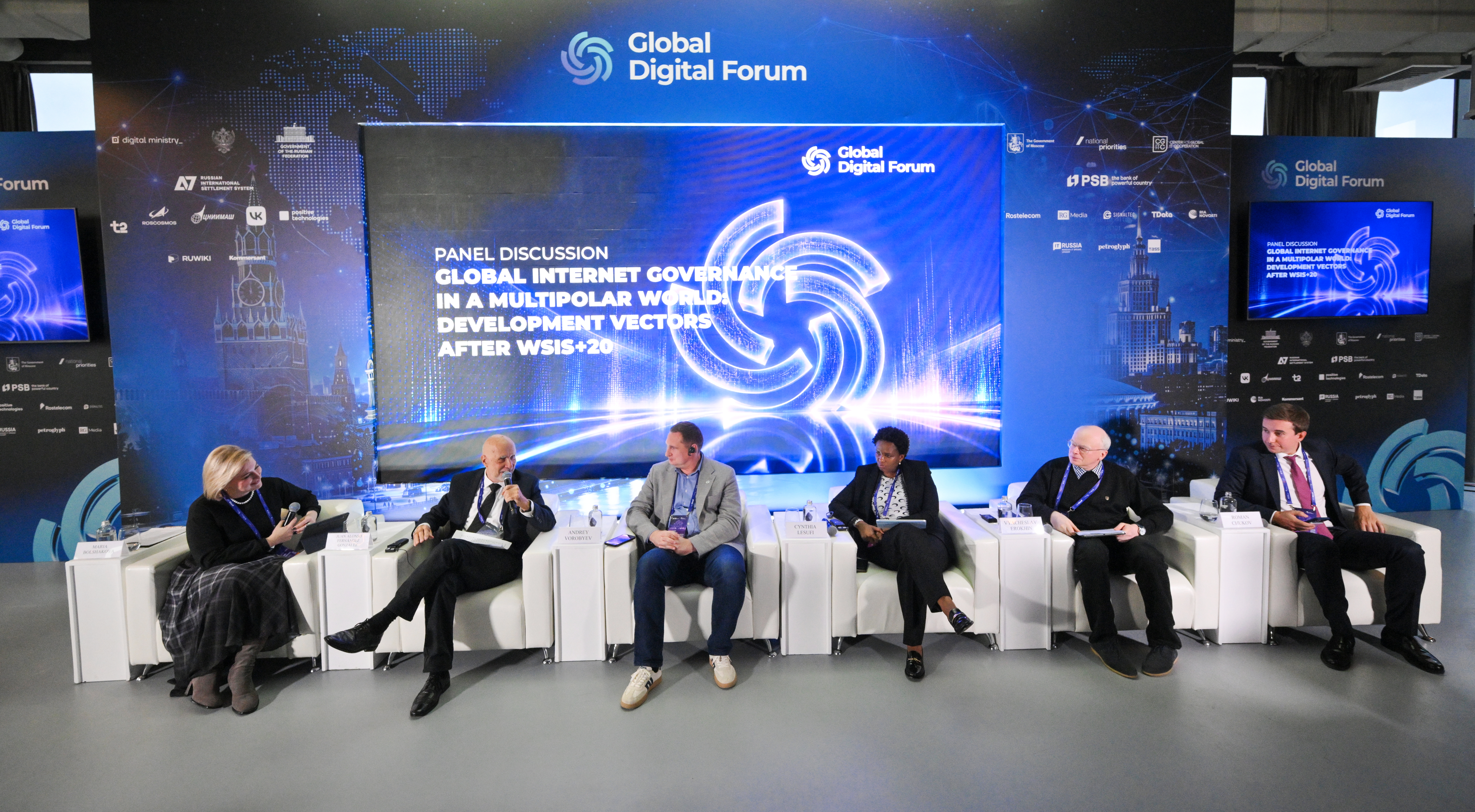
Participants in a GDF 2026 panel discussion, Global Internet Governance in a Multipolar World: Development Vectors after WSIS+20, discussed internet and AI governance and the existing issues in the global governance system.
Juan Alfonso Fernández González, Adviser to the Cuban Ministry of Communications, noted that the world needs to regulate the internet and AI.
“It is no longer so easy to defend the position that the internet requires no regulation. The question is how to do it?” he said.
Cynthia Lesufi, Chair of the ITU Council Working Group on WSIS and the Sustainable Development Goals (WSIS&SDG), stressed the importance of maintaining an inclusive global approach to internet governance and taking into account the roles of different stakeholders – the state, the private sector, civil society, international organizations, researchers, and technical experts.
“All this provides a basis for cooperation among emerging centers of influence, while allowing us to maintain an inclusive global approach to internet governance,” she said.
Vyacheslav Erokhin, Head of Laboratory at the Telecom Research Center, noted that the main problem with internet governance is not the absence of a single fair and independent governing body.
“The root of the problem is that developed countries that were instrumental in the internet’s creation, that now possess the key technologies and technological capabilities, and where the major internet platforms are registered, are simply interested in maintaining the status quo,” he said.