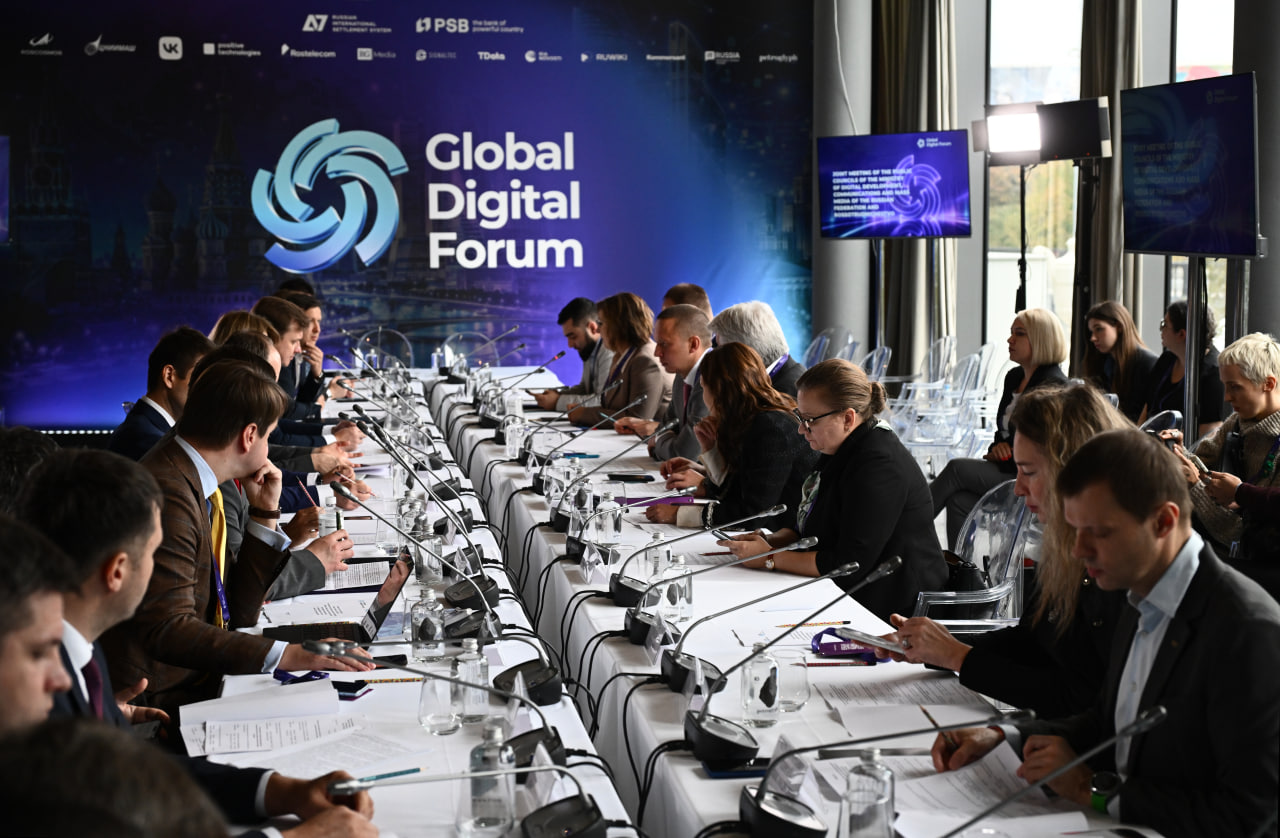


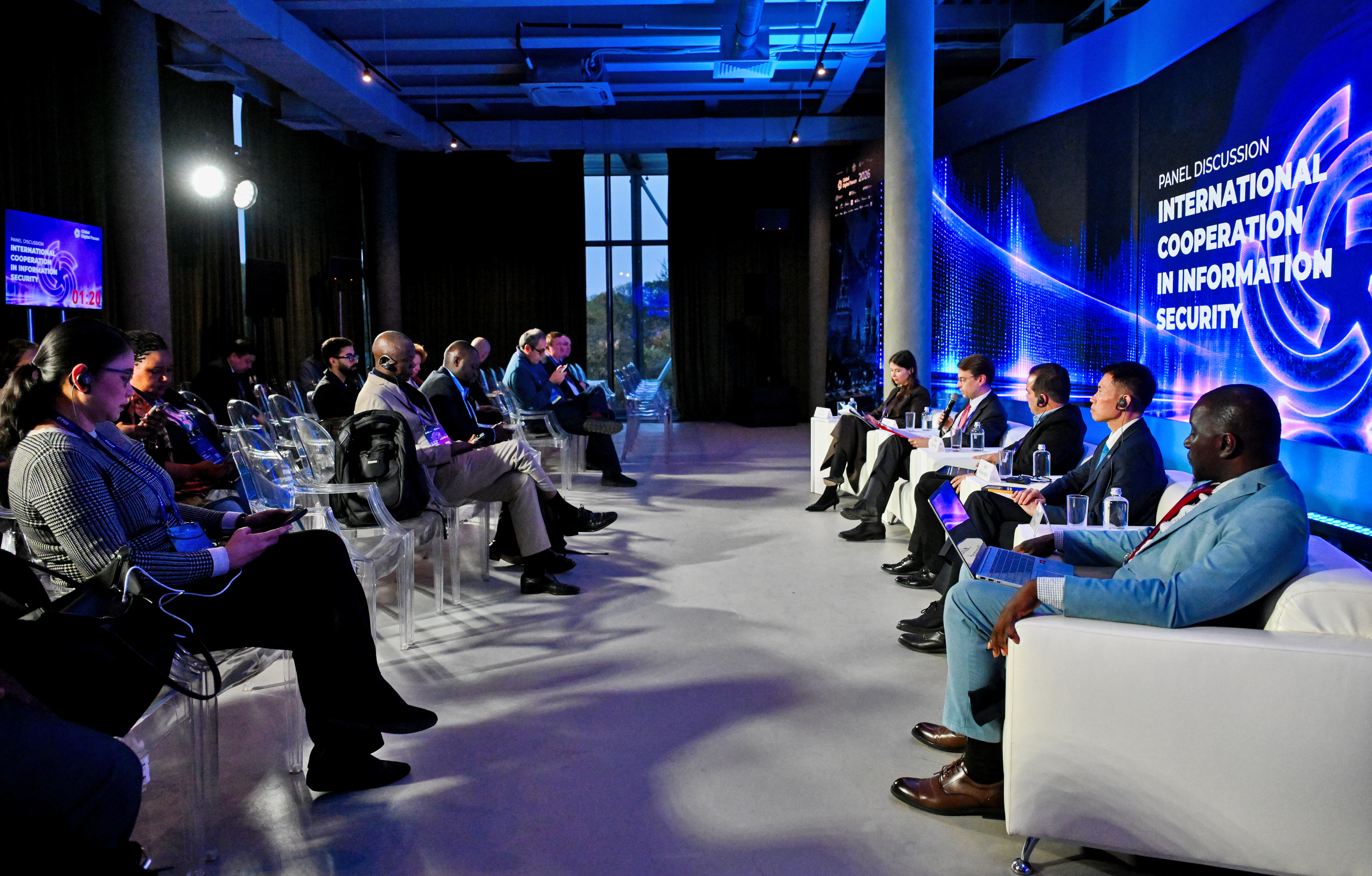
Participants in a session held with the support of the Russian Foreign Ministry discussed the work of the UN’s Global Mechanism on ICT Security and the need to establish legally binding rules for cyberspace.
In a video address, Egriselda Aracely González López, Chair of the UN Global Mechanism on ICT Security and Permanent Representative of El Salvador to the UN, highlighted the establishment of a permanent mechanism following years of international discussions.
“We have held our first session, and the discussions showed that we have a clear and solid foundation on which to build our future work. Different perspectives were expressed, which is both natural and expected. Such exchanges help countries better understand one another. Our next challenge is to move from agreements to practical implementation,” she said.
Andrey Akulchev, Acting Director of the Department of International Information Security at the Russian Foreign Ministry, noted a troubling trend: while artificial intelligence has become a valuable tool, it is also increasingly being exploited for malicious purposes.
“Regrettably, we must acknowledge that the international information security situation is deteriorating year by year – or even day by day, I would say,” he emphasized. Andrey Akulchev also raised concerns about the growing militarization of the private sector, noting that major Western technology developers are working as contractors for military and intelligence agencies, supporting their intelligence-gathering activities.
He also pointed to the growing scale of cybercrime, warning that hackers are using advanced technologies, including artificial intelligence, to carry out attacks more quickly and easily.
“The only way to make cyberspace more stable, secure, and predictable is through international cooperation,” Andrey Akulchev stressed.
According to Andrey Akulchev, voluntary codes of conduct are no longer enough. Instead, legally binding international rules must be established through multilateral platforms, particularly the United Nations. Some progress has already been made: on December 24, 2024, the UN General Assembly adopted the UN Convention against Cybercrime at Russia’s initiative, marking the first universal international treaty in the field of information security.
Daniel Perea Núñez, Director General of Cuba’s Office for the Security of Computer Networks, discussed the challenges facing his country. “Today, we face the threat of fake news aimed at undermining our constitutional order,” he said.
Perea Núñez stressed that information security must be rooted in the principle of state sovereignty.
“Cyber threats must not be used as a tool to exert pressure. We need to engage in dialogue, although this is no easy task. It is difficult for us to withstand the pressure from unfriendly countries,” Daniel Perea Núñez emphasized.
Jadet Khuhakongkit, Assistant Secretary-General of the National Cyber Security Agency of Thailand, called for stronger international cooperation on cybersecurity.
“We cannot accomplish this important mission alone. We are ready to work with partners to develop an action plan for information and communication technologies. We are open to cooperation and coordination with international partners, and I invite you to join us in building bridges between nations,” he said.
Sanusi Drammeh, Director of the Cybersecurity Department at The Gambia’s Ministry of Communications and Digital Economy, identified three key priorities for international cooperation: early warning systems, mutual assistance, and the protection of services used by governments.
“We must engage in cyber diplomacy and work within the UN framework. There needs to be a clear understanding of what states can and cannot do,” he stressed.