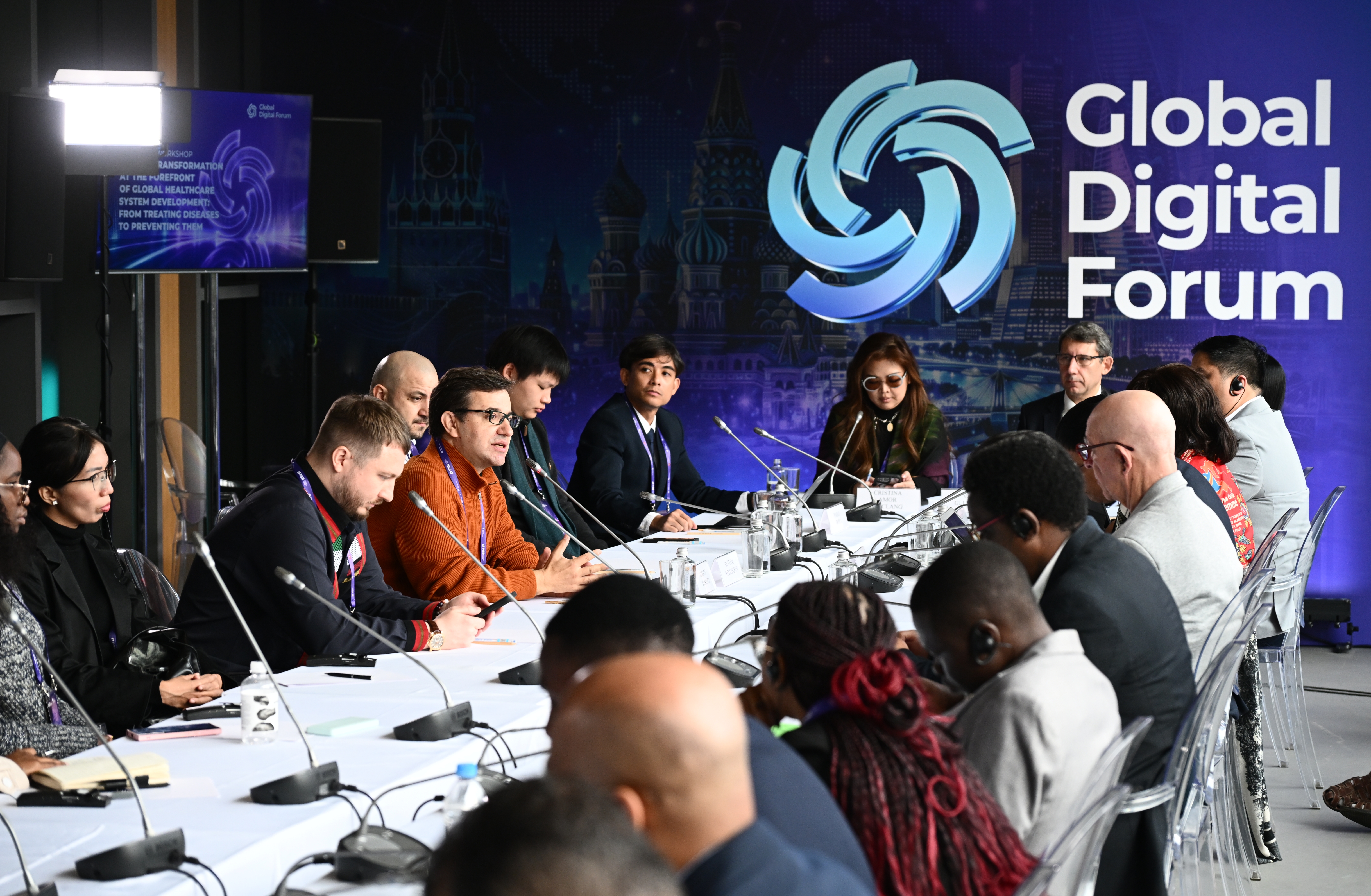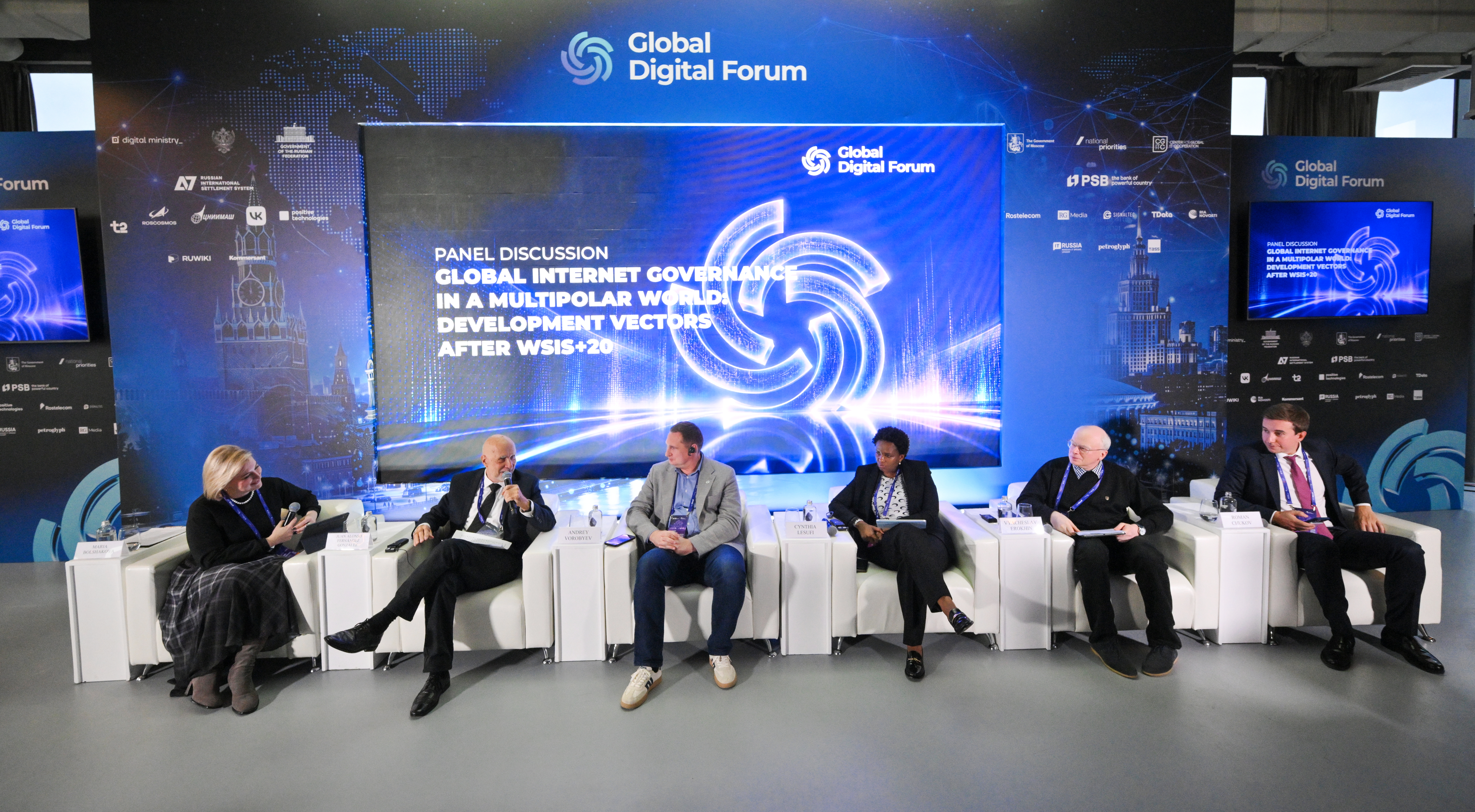


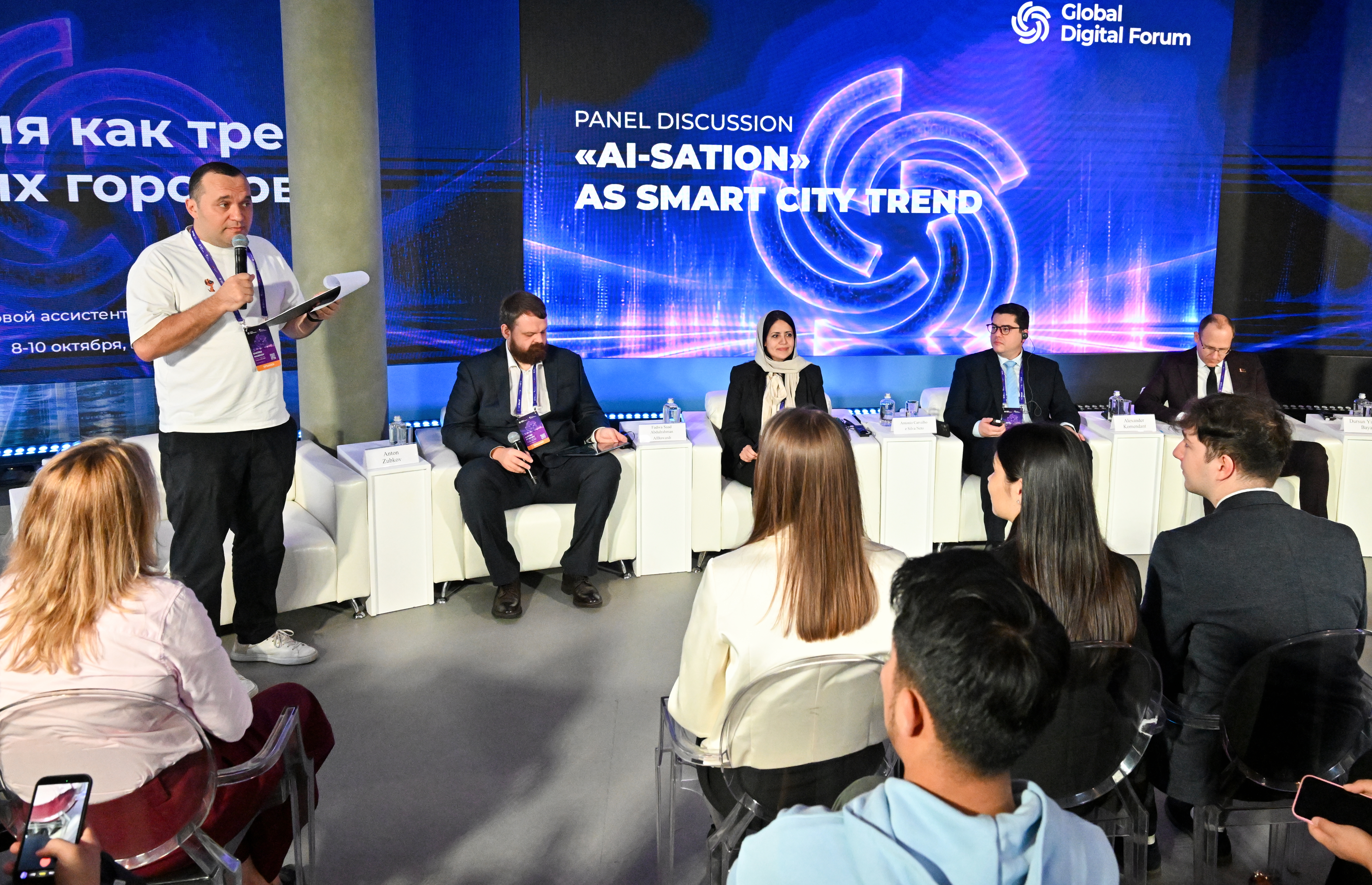
The panel discussion AI-sation As Smart City Trend focused on the transformation of the digital urban landscape in which AI technologies are employed. Experts also reviewed practical cases of implementing AI assistants in the urban environment, as well as the effects of scaling up, replication opportunities and the resources required to achieve this.
Anton Zubkov, Head of Project Support at the Official Portal of the Mayor and the Government of Moscow, Moscow Department of Information Technologies, spoke about the Moscow digital assistant. He said that it is not a chat bot but a unified intelligent interface for interaction between citizens and the urban digital ecosystem.
“AI helps change the logic and language of interaction between people and the authorities. When engaging with the authorities, people need to know which service they need, which is where AI helps us simplify this complicated formal interaction,” Anton Zubkov said.
As of spring 2026, 88% of Moscow residents requested information or services via chat bots and voice assistants, and 23% do this every day.
“Over the past 20 years, we have learned to digitize public services, and today we are ready for the next stage. We are not digitizing services; we are digitizing the interaction itself,” Zubkov said.
He said that the main success metric for AI in public service is the reduction of citizens’ time and effort.
Fadwa Saad Abdulrahman AlBawardi, CEO of Fadwa AlBawardi Consulting Office, spoke about transition from an isolated point-based AI system to a unified AI ecosystem in a smart city. She noted that Saudi Arabia has developed a strategic approach to this issue.
According to her, the first step is to make sure that you actually have a solution to overcome data fragmentation. Every government agency in Saudi Arabia, for example, has a data management office.
Alexander Komendant, First Deputy Chairman of the Minsk City Executive Committee (Belarus), briefed the audience on their digitization experience, namely digital assistance, which are changing the people’s interaction with the city. These include voice agents, text assistants, handwriting OCR, smart city computer vision, clinical decision support systems, and public safety monitoring.
“We evaluate the sustainability of AI solutions across four interconnected blocks – the economic block, social effects – because everything we do must benefit the people, for it won’t be worth it otherwise, technological sustainability and flexibility, as well as security and the protection of people’s rights and personal data,” Alexander Komendant said.
He added that no city is capable of independently developing the entire family of cutting-edge neural network technologies, which calls for joint international efforts.
Jumamudun Jumaliev, Director of Municipal Enterprise Center for Digital Technologies of the Bishkek City Hall (Kyrgyzstan), spoke about the use of AI to effectively address urban tasks, enhance the quality of services, and use data to adopt correct decisions.
“Artificial intelligence is not an emerging technology for us but a practical tool which we are actively using for urban management, “ he said.