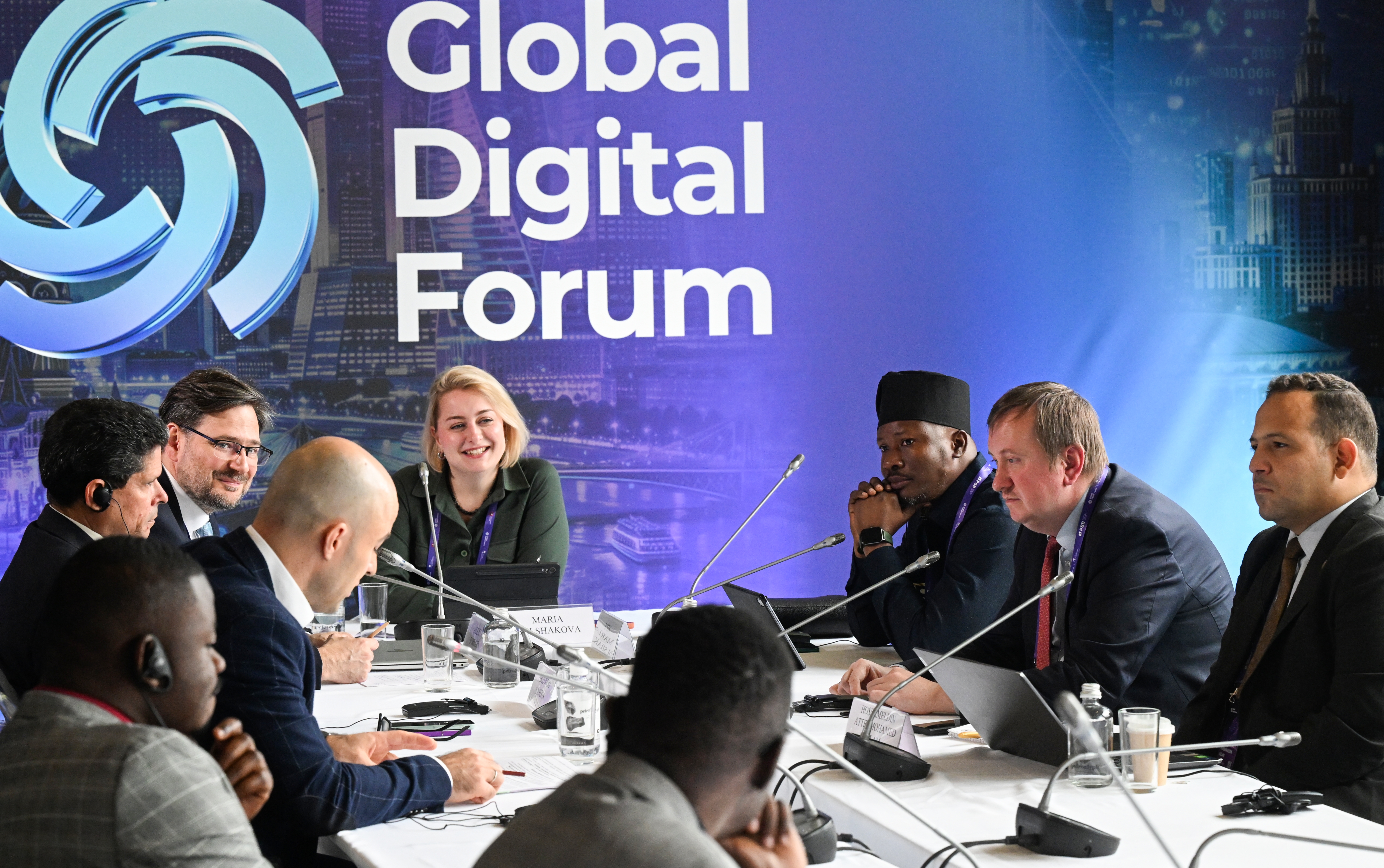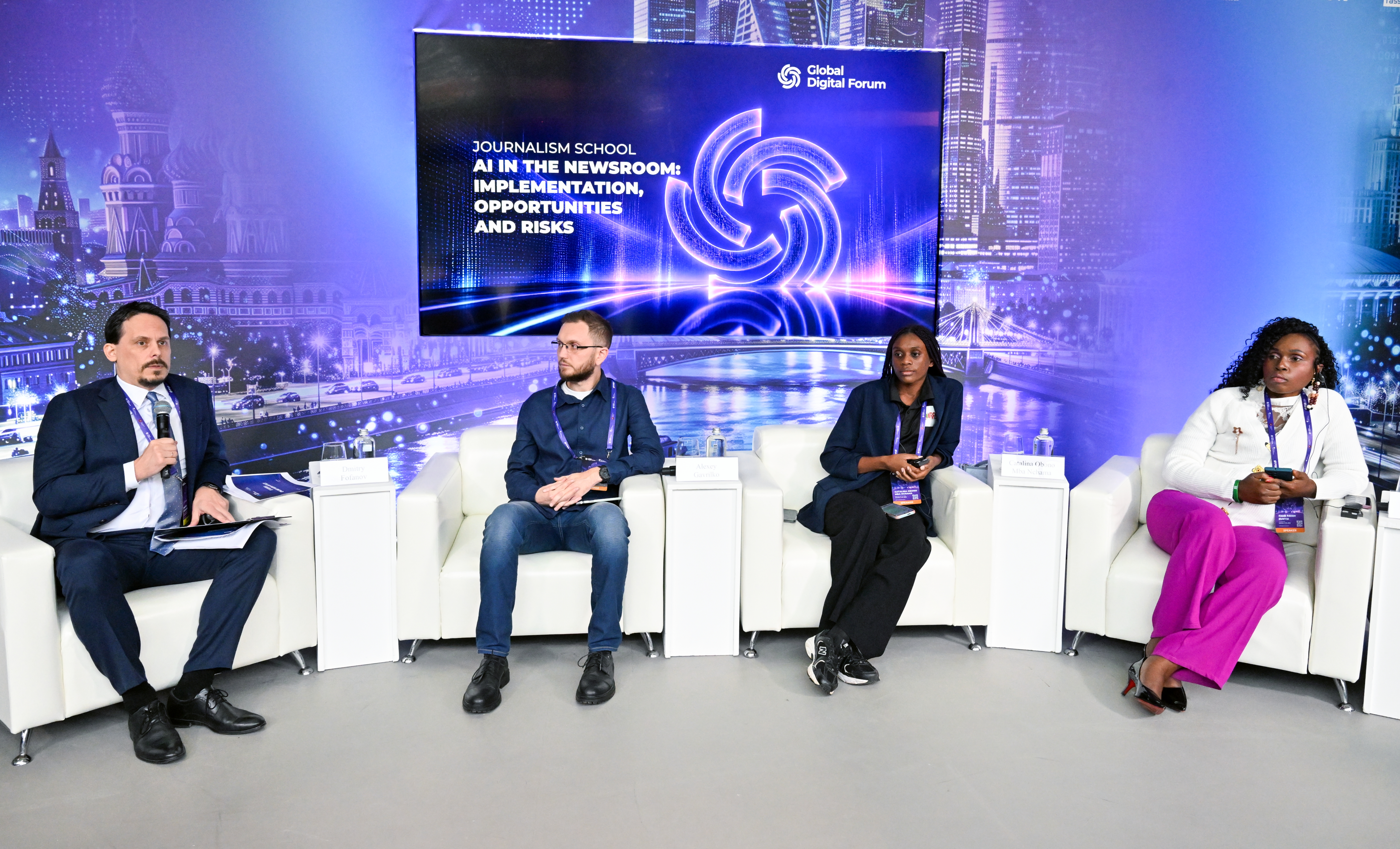


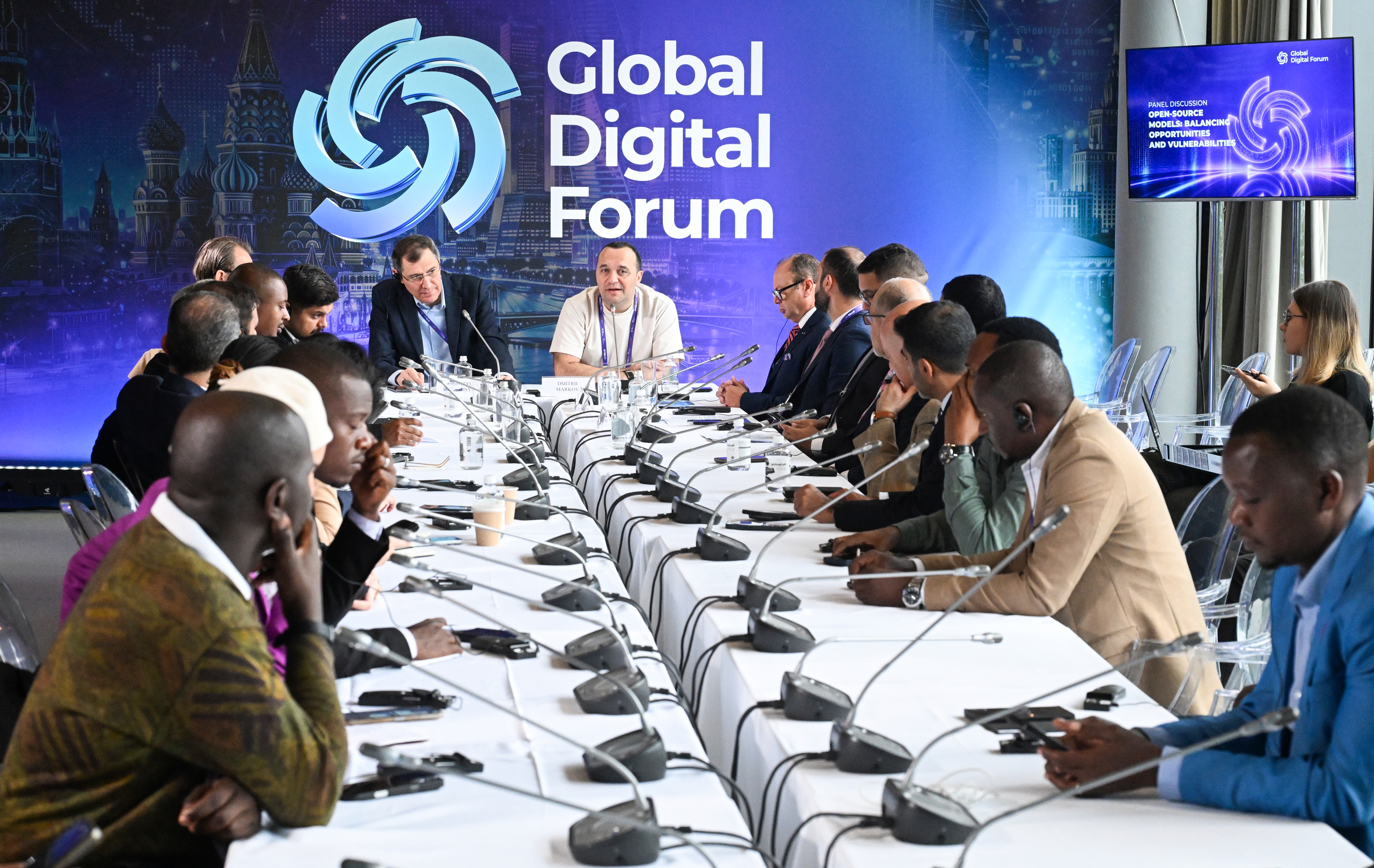
Experts discussed plans for the use and development of open-source models, as well as the risks associated with their adoption, during the panel discussion Open-Source Models: How to Balance Opportunities and Vulnerabilities.
Dmitrii Markov, CEO of VisionLabs, believes that Russia has found a balance between openness and security in the development of AI models.
“In our country, the law on artificial intelligence promotes a risk-based approach. This means that certain requirements will be imposed on models because of the existing critical infrastructure. We believe that critical infrastructure should probably use models that we can control,” he said.
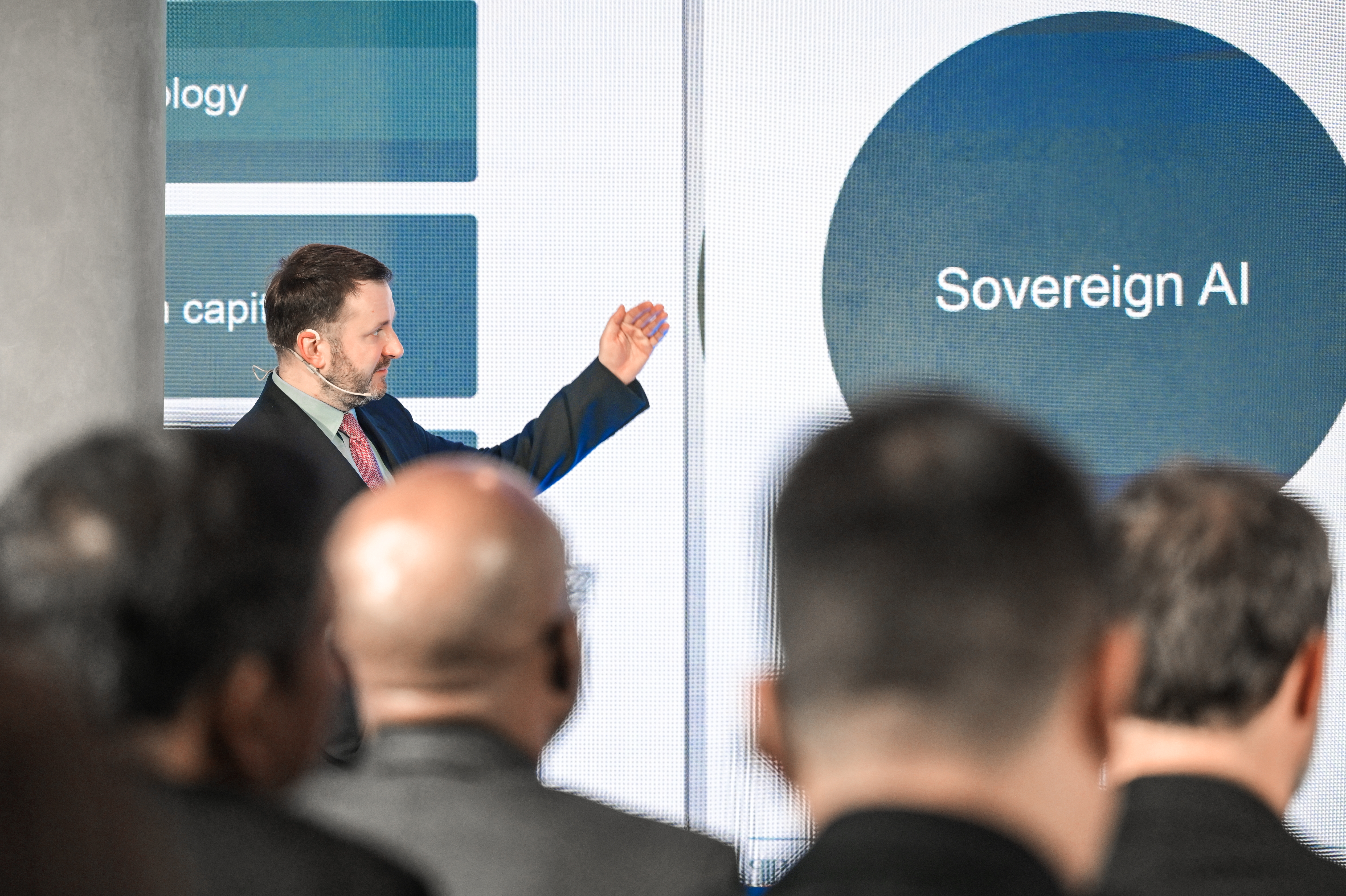
According to Managing Director of the Sber Center for Human-Centred AI and Member of the Independent International Scientific Panel on AI, UN, Andrey Neznamov (Russia), open-source models are needed to address existing inequalities in access to AI technologies.
“Clearly, these models create opportunities for malicious actors, so security measures are needed. However, only AI developers can establish security perimeters, which is why we need to engage in dialogue with them. We simply cannot halt development. Yes, it involves risks, but it also offers a great many opportunities,” he said.
Digital Technology and International Development Specialist at the United Nations Office for Digital and Emerging Technologies (ODET) Francesco Stabilito (Italy) said that open-source models require supporting infrastructure.
“We need to build up human resources and develop technical skills. Specialists need the skills to develop models, know how to calibrate and fine-tune them, and understand what kind of ecosystem is needed to support them,” he stressed.
AI Engineer at Facehawk Limited (Pakistan) Monis Ali Zain Ul Abid Edin added that Pakistan focuses on fine-tuning existing models using local datasets.
“There is no need to create models from scratch, which would involve an enormous amount of work, including data collection and infrastructure development. It is much easier to take a base model and fine-tune it. We need to carry out checks and understand the model’s origins and development history. These are all factors that need to be considered. Creating a model from scratch requires huge amounts of data and funding,” he said.
Analytics and Machine Learning Engineer in Telecom Egypt (Egypt) Mostafa Ahmed El Demery highlighted the importance of documentation when working with models.
“Every dataset, every model and every test must be documented. This is because, if you need to roll back a model, you will be able to do so more efficiently,” he said.
Trevor Takudzwa Mudondo, a product manager at Econet AI Zimbabwe (Zimbabwe), argued that AI would be essential for the next generation of young Africans seeking to solve local problems.
“We know that creating a model from scratch is costly, even for large corporations. That is why we rely on open-source models while maintaining control over the data. Infrastructure is the key to success for us,” he said.
Director General of the Arab Information and Communication Technologies Organization (AICTO) Mohamed Ben Amor (Tunisia) said the organization had established six subcommittees whose work would inform a decision on which model to adapt.
“By then, I believe the open-source models will have been evaluated, providing an alternative for Arab countries, given existing concerns about digital sovereignty and the protection of private data. Open-source models could be a good alternative when it comes to sovereignty,” he said.