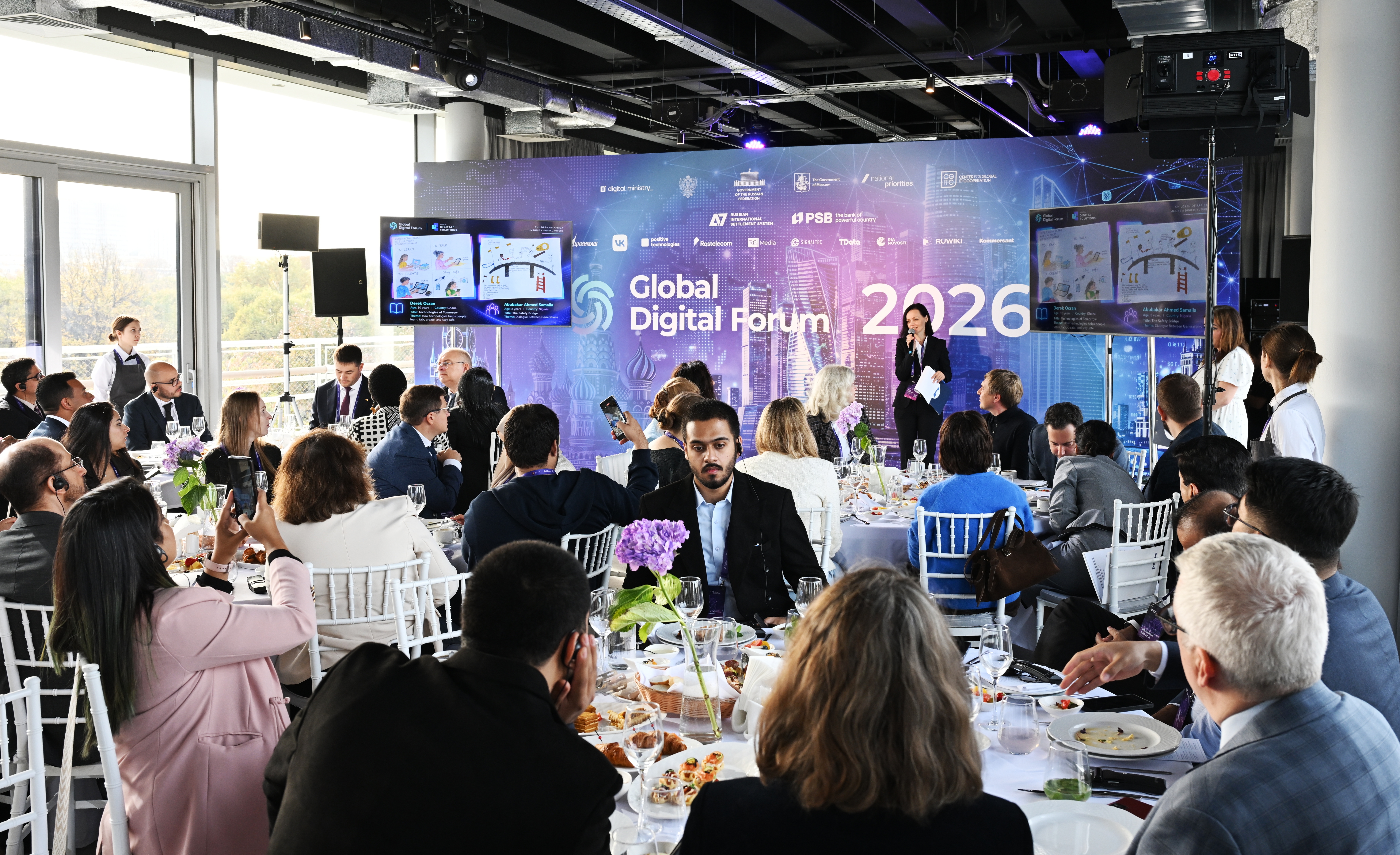


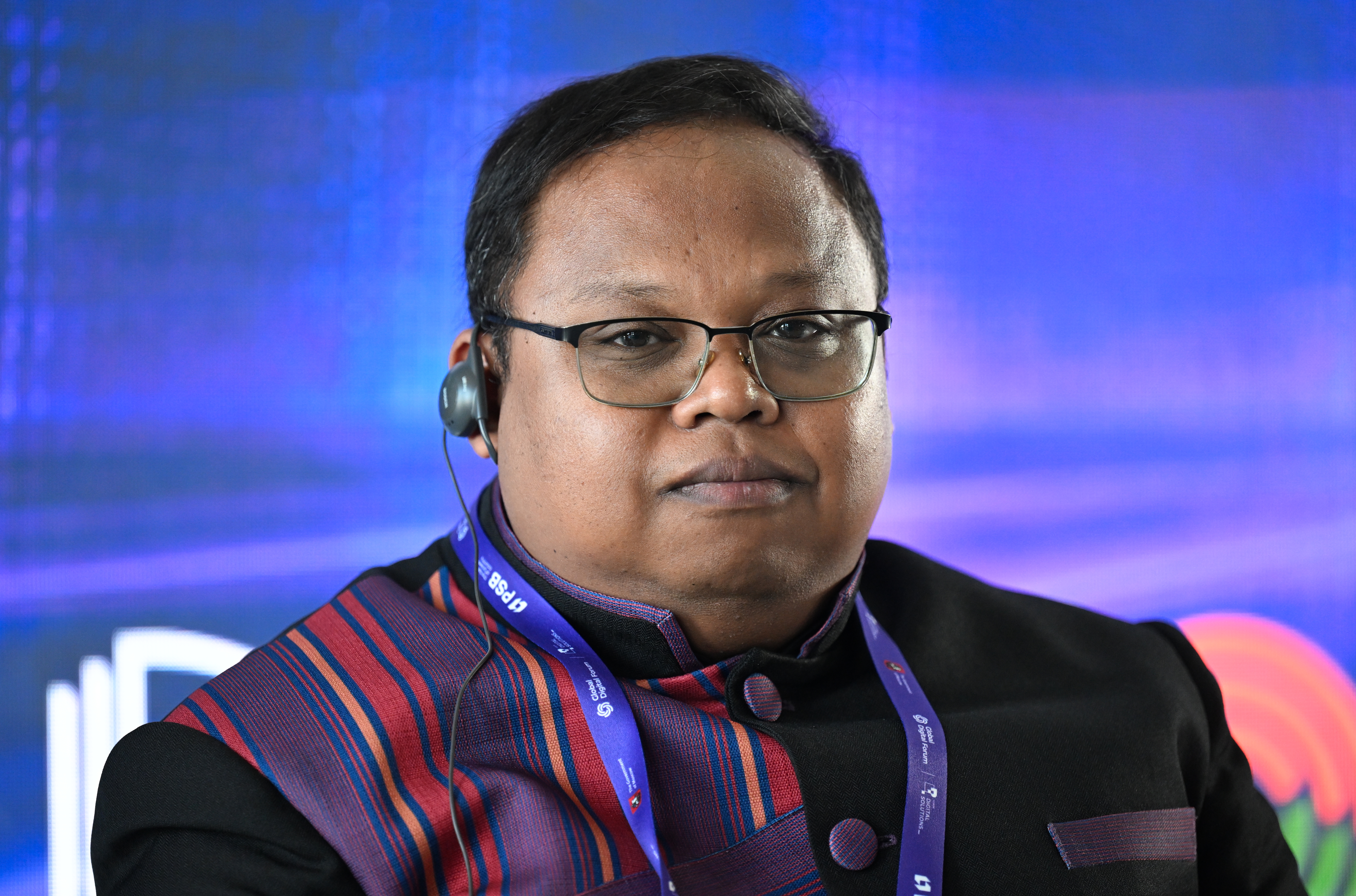
Ahead of his visit to Moscow, Mahefa Andriamampiadana, Minister of Digital Development, Digital Transformation, Posts and Telecommunications of the Republic of Madagascar, discussed the country’s priorities in IT development and his expectations for the 2nd Global Digital Forum.
– What are the key IT development trends in your country, and which areas of digitalization are currently being prioritized?
Mahefa Andriamampiadana: Madagascar is currently undergoing a digital transformation that is steadily gaining momentum. This momentum is driven by expanding connectivity and the increasingly widespread use of digital technologies in both the public and private sectors, especially in mobile and financial services. Our central challenge remains ensuring access to these technologies in rural and remote areas. At the same time, the public sector is accelerating its own digitalization, and a comprehensive digital ecosystem is taking shape, built on innovation and entrepreneurship.
- In this context, our priorities are clear:
- expanding digital access and promoting digital inclusion, particularly in rural and low-income areas;
- building resilient and secure national digital infrastructure;
- digitizing public services and ensuring their interoperability;
- enhancing digital governance, data management, and cybersecurity;
- developing digital skills, innovation, and entrepreneurship.
Artificial intelligence is also emerging as a new priority: our goal is to equip the country with the capabilities it needs to understand, evaluate, and use these technologies responsibly, for the benefit of society. More broadly, Madagascar seeks to make digital technologies a key driver of sustainable development by strengthening national capacity and building international partnerships grounded in cooperation, co-developing solutions, and knowledge and skills transfer.
– In your view, which sectors of the country’s economy have the most pressing need for the adoption of digital technologies, and in which areas are digital technologies being adopted first?
Mahefa Andriamampiadana: In Madagascar, the need for digital transformation is felt most keenly where it can meaningfully bridge the digital divide and improve access to basic services. First and foremost, we are focusing on rural and underserved areas, as well as education, healthcare, public services, and youth employment. Strengthening digital security and resilience is also a critical priority.
Specifically, IT adoption is structured around the below four areas:
- sovereign and secure digital infrastructure;
- expanding connectivity and digital inclusion;
- developing digital skills and innovation;
- building a digital government – digital identity, interoperability, e-public services, and electronic payments.
Our investment logic is simple: to focus our efforts where the impact will be most tangible, namely, on access to services, skills development, and government modernization.
– To what extent are AI technologies being deployed in your country, and in which sectors, in your view, could they be most effective?
Mahefa Andriamampiadana: The use of artificial intelligence in Madagascar is still at an early stage, but its adoption is expanding across both government agencies and private organizations. Businesses are beginning to explore use cases related to automation, data analytics, and productivity gains. In the public sector, one concrete example is the Malagasy Customs Authority, which already uses AI for risk analysis, anomaly detection and fraud prevention, and automating various tasks, with the clear goal of improving the efficiency and quality of inspections.
More broadly, we see significant potential in AI wherever it can accelerate processes, rapidly process large volumes of data, automate routine tasks, and support specialists. In particular, it could contribute to the transformation of public sector services – citizen support, processing and routing inquiries, and data analytics.
For Madagascar, the objective is not to deploy AI for its own sake but to develop meaningful use cases that respond to real needs and deliver tangible benefits to both citizens and public institutions. This requires enhancing skills, infrastructure, and data management in parallel, so that the country can gradually build its capacity to understand, evaluate, and use AI responsibly, for the benefit of society.
That said, we are guided by a simple principle: this technology must remain human-centric. AI is a tool that augments human capabilities; it does not replace them. The final decision must always rest with qualified individuals and institutions.
– What are the main challenges your country faces in its digital transformation and in building digital infrastructure?
Mahefa Andriamampiadana: There are many challenges, but we tackle them head-on. In particular, we need to:
- ensure access to high-quality digital infrastructure and affordable connectivity, especially in rural and remote areas;
- upgrade and expand this infrastructure, which requires substantial investment;
- build skills to sustainably bridge the digital divide;
- develop fully interoperable digital public services;
- enhance digital governance, data protection, and cybersecurity;
- adapt our regulatory framework to the pace of technological change and the growth of the digital economy.
Beyond the infrastructure itself, our main task is fundamentally human and institutional in nature: we need to build the capacity to ensure our digital transformation is inclusive and sustainable and creates real value for citizens and the economy.
– Which model, in your view, will ultimately prevail worldwide: national digital sovereignty, or openness and global solutions?
Mahefa Andriamampiadana: For Madagascar, digital sovereignty and international openness are not mutually exclusive – far from it. The model that we believe is most resilient is sovereignty built on capacity: the capacity to control our own infrastructure and data, to evaluate available technologies, to choose solutions that meet our specific needs, and to manage them.
We must also recognize that even the most technologically advanced states remain deeply integrated into global value chains, research ecosystems, and networks of international cooperation. Consequently, collaboration and access to global solutions and expertise will always remain essential to digital development, even for the largest powers.
That is precisely why we seek to build partnerships in which states are genuine participants and co-creators, not merely aid recipients, facilitating a genuine transfer of skills and knowledge. In my view, international openness should above all serve to strengthen national capacity, so that every state remains able to understand, evaluate, and control the technological solutions they adopt.
– What are your expectations for the upcoming forum? Are any agreements with our Russian counterparts expected to be signed as part of the Global Digital Forum?
Mahefa Andriamampiadana: We expect far more from the Global Digital Forum than just a ceremonial event: a genuine platform for dialogue and the sharing of experiences that enables us to forge partnerships in digital transformation, infrastructure, artificial intelligence, cybersecurity, and skills development. Our goal is to identify concrete opportunities for cooperation, knowledge sharing, and skills transfer in line with the country’s needs and priorities.
As for the signing of agreements with Russia, no specific agreements have been finalized yet. That being said, our delegation would like to use the forum to engage with Russian and international participants, identify areas of common interest, and explore opportunities for cooperation. We remain open to formalizing these partnerships, provided they align with the country’s needs and allow us to establish concrete, mutually beneficial collaborations.