

In an era awash with information and AI tools, the media landscape is saturated with content, including deepfakes. News feeds are increasingly driven by algorithmic recommendations, making trust the decisive factor in successful audience communication.
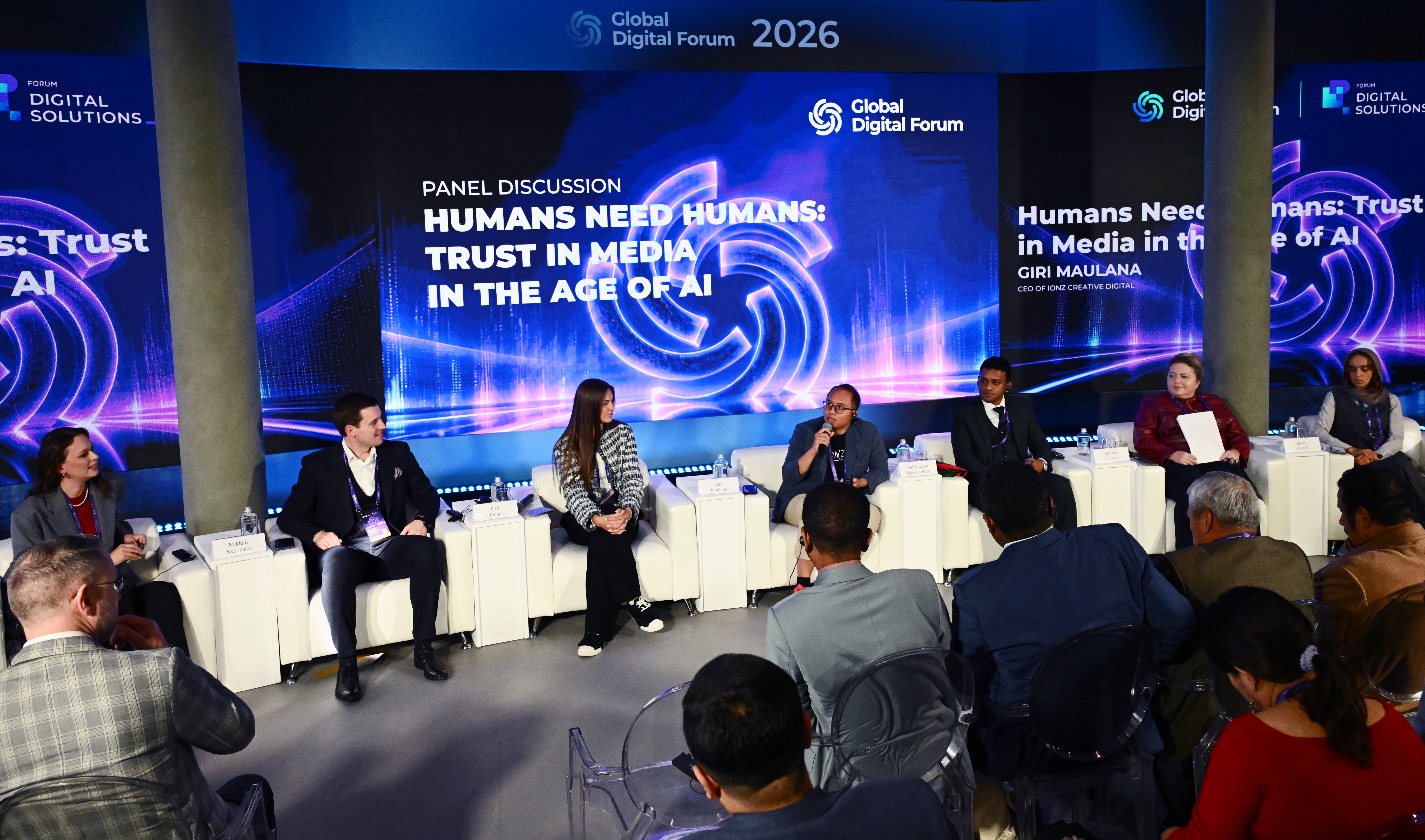
Participants in the panel discussion Humans Need Humans: Trust in Media in the Age of AI explored the role of critical thinking in modern content consumption and identified the professional journalistic functions that algorithms cannot replace.
IT entrepreneur Mikhail Skobenko believes that AI enables anyone to create high-quality content – yet journalists and bloggers often neglect fact-checking.
“I would say we are entering the era of cheap credibility. Today, the most valuable asset is becoming the economy of trust,” he argues.
Skobenko also noted that in the age of AI, the most important thing is showing readers or viewers why they should trust your content — and not anyone else’s.
Darya Yegorova, a lead at Sber’s B2C Data and Recommender Systems, views artificial intelligence as a valuable tool for handling routine tasks. But there is a downside: the integration of AI tools significantly affects internet users. She points out that AI now defines our interests and shapes our social media feeds.
“We must always take a critical look at who is behind a given message. <…> We need to engage our curiosity and critical thinking when consuming content,” Yegorova emphasized.
Giri Maulana, founder of Ionz Creative Digital, argued that transparency is becoming integral to modern media content. Content creators, he said, should label their sources and make it easy for audiences to verify information.
He also noted that creators, journalists and platforms must take responsibility for their errors.