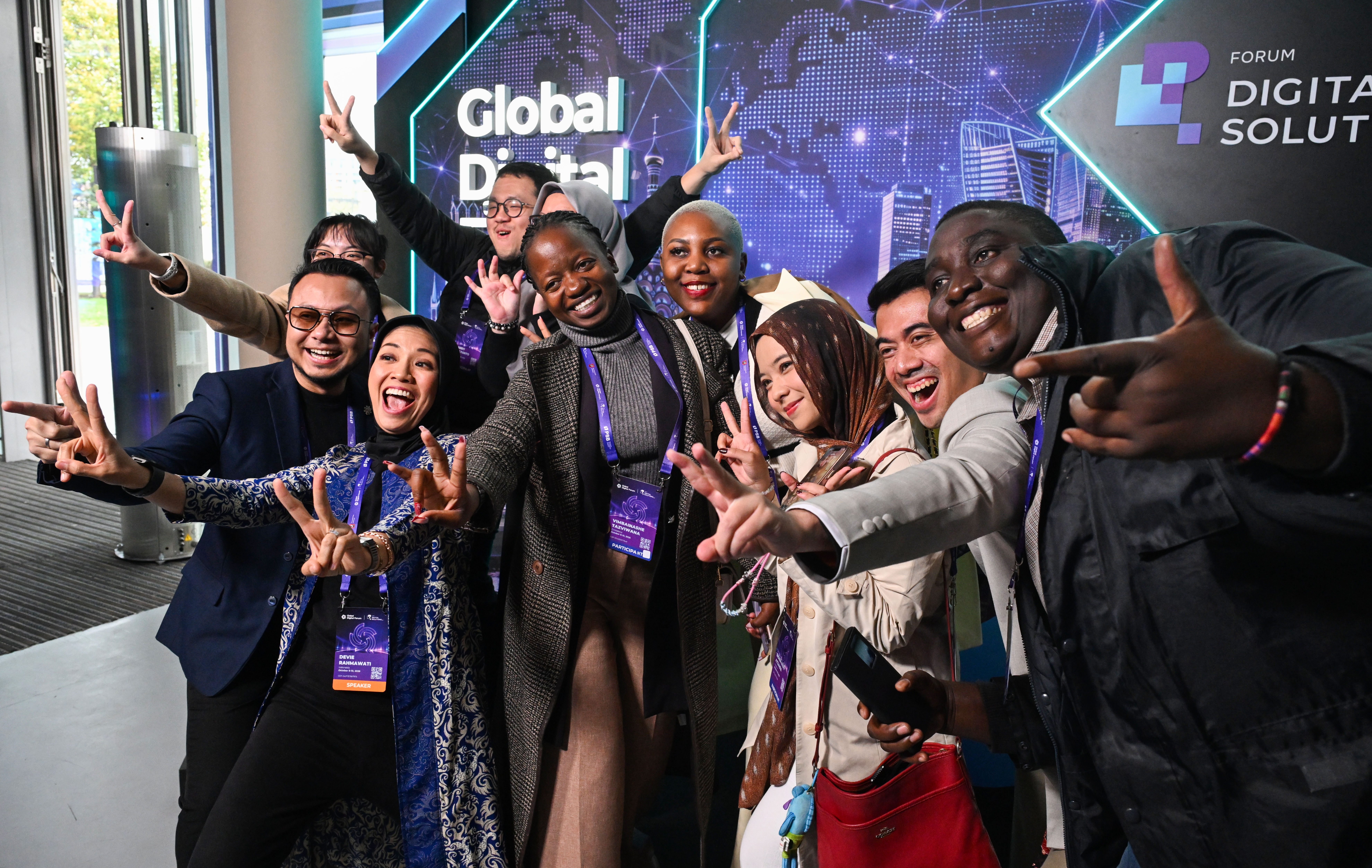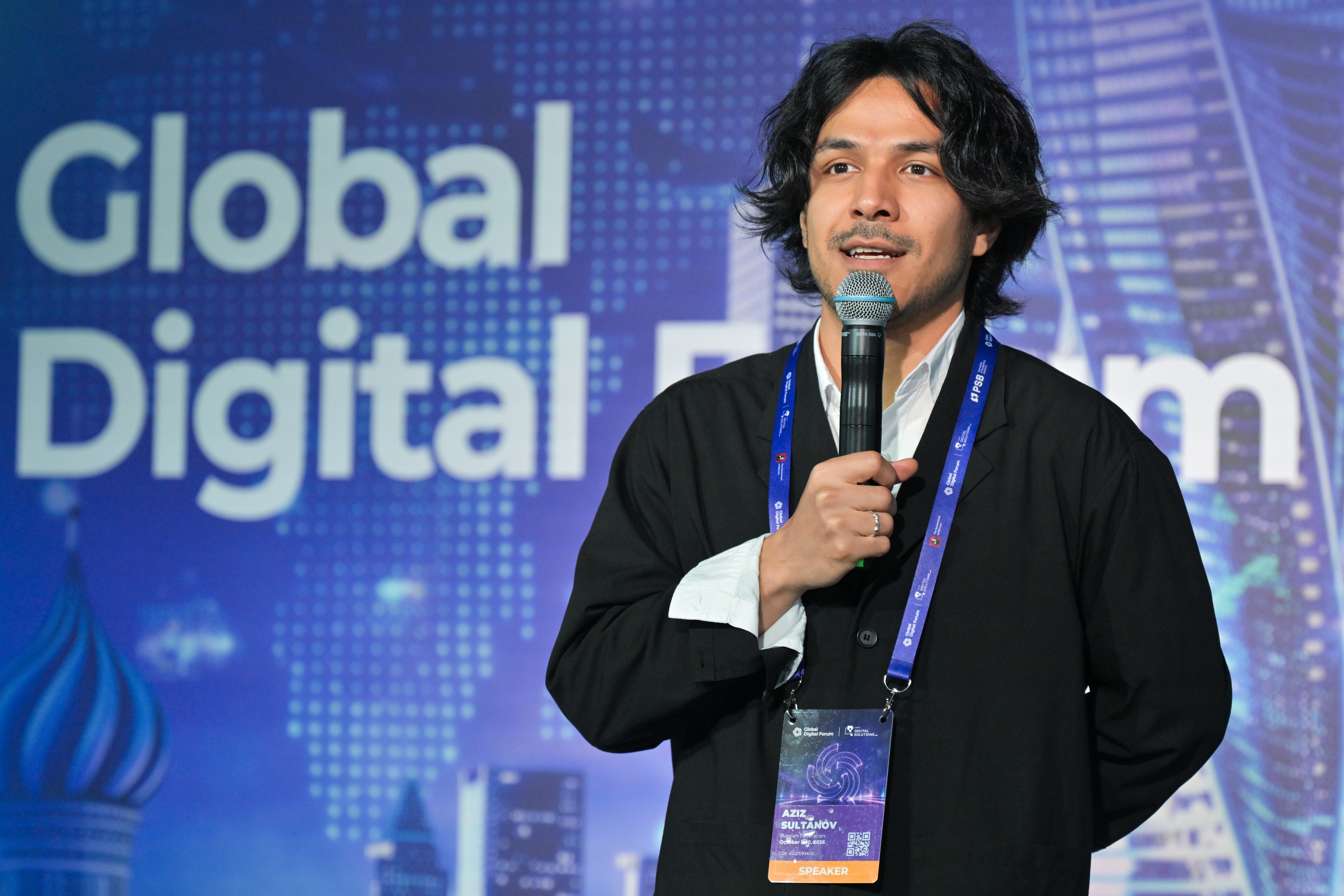



The 2nd Global Digital Forum is set to serve as a platform for promoting the sharing of best practices by enabling the participating countries to present their best solutions to their partners. In particular, our Belarusian colleagues are looking forward to working on the Russian market. Sergey Rudnev, CEO at Belarus’ Digital Transformation Agency, sat down for an interview to discuss the main avenues and opportunities for developing information technology in the Republic of Belarus, as well as the challenges his country is facing on its path to digital transformation.
Question: What are the main trends in developing information technology in your country, and what are its priorities in the digital transition?
Sergey Rudnev: In its effort to develop and promote IT, Belarus has moved from automating isolated processes to building a unified data-driven digital environment. There are state policy guidelines for the period from 2026 through 2030, which define three domains: Data Economy, Digital Governance and Digital Sovereignty. Our main goal is to create an entire ecosystem of digital solutions that would serve people, businesses and the state.
Today’s priorities include:
• Upgrading the telecommunications infrastructure, communications networks, data centers and cloud technology.
• Improving the quality of government data, integrating them and using analytics and AI in the decision-making process.
• Transitioning from the e-government concept to a digital state, which entails being able to offer proactive services for dealing with real-life situations, promoting the “state in your pocket” concept, and fulfilling the zero red tape principle.
• Promoting the digital transition in manufacturing, agriculture, healthcare, education, transportation, construction and other sectors.
• Developing homegrown software to reduce dependence on foreign solutions and ensure digital sovereignty.
• Enhancing cybersecurity, protecting state IT systems, critical infrastructure and personal data.
• Enabling people to improve their digital skills and training specialists for the digital economy.
There is a separate trend which consists of the rapid expansion of AI applications. Belarus is buildings its own national platform so that AI models can operate at a local level, while also introducing smart assistants, video analytics, processing unstructured datasets, technologies of precision agriculture and digital environmental monitoring. In September 2026, 14 projects dealing with public administration, the real economy, interstate data exchanges and digital services were added to the program.
Therefore, Belarus is determined to go beyond digitizing the document flow by promoting a comprehensive transformation: data must be reusable, and people must get the services they need without having to file unnecessary applications. As for the digital systems, they must be interconnected, safe and based on our own solutions as much as possible.
Question: Which economic sectors need digital technologies especially badly, in your view, and where are they already being implemented?
Sergey Rudnev: The need for digital technologies is most critical in industry, agriculture, healthcare, transport and public administration. These areas are noted for a large number of participants, complex production processes, and a large volume of data. Industry needs digital transformation to increase productivity and reduce dependence on imported technologies. In agriculture, it implies a more rational use of equipment, fertilizers and land resources. It can make medical services more accessible and enhance their quality. And its use in transport can help streamline logistics and infrastructure management.
The focus is on the introduction of data collection, integration, and analysis systems, industry-specific digital platforms, AI, and process automation. In industry, this means digital production management, quality control, and equipment failure prediction. In agriculture, it is precision farming and digital crop production maps. In healthcare, it is electronic health records, telemedicine, and a clinical decision support system. In transport, it is freight flow management and optimal routing. The priorities in public administration are proactive electronic services, interagency data exchange, and paperwork reduction.
Question: How actively are AI-assisted technologies used in Belarus, and where can they be most effective?
Sergey Rudnev: AI-assisted technologies are being used in our banking sector, industry, medicine, agriculture, trade, video surveillance and public administration. However, their introduction cannot be described as sweeping. Most solutions are at the stage of pilot projects or being used for specific tasks. The Digital Belarus program includes plans to create a national AI platform and develop intelligent assistants, video analytics, and big data processing systems.
AI can be most effective in the sectors with substantial volumes of quality information, where routine decisions must be taken rapidly. In healthcare, it is diagnostics and clinical decision support. In industry, it is quality control and equipment failure prediction. In agriculture, it is crop condition assessment and fertilizer dosage calculation. In banking, it is fraud detection and risk assessment. In public administration, AI should be used to analyze incoming citizen requests, forecast socio-economic processes and draft decisions while retaining ultimate human accountability.
Question: What are the main challenges for Belarus in the area of digitalization and the creation of digital infrastructure?
Sergey Rudnev: The main challenges include technological dependence on imported software and hardware, restricted access to certain modern technologies, the shortage of skilled IT personnel, and the high cost of infrastructure modernization. Another persisting problem is uneven digital maturity across industries and organizations, with modern platforms being used alongside obsolete and loosely coupled information systems.
Other major challenges are improving the quality of government data, ensuring its interoperability and secure interagency exchange, as well as protecting critical information infrastructure from cyber threats. We must also reduce the digital divide between regions and age groups, promote digital literacy, and adjust legislation to AI development. It is important for digital transformation to be complemented with process reorganization, because digitalizing bureaucracy without reforming it won’t bring the desired effect.
Question: Regarding the digital sovereignty of an individual country versus openness and global solutions – which paradigm do you think will ultimately prevail worldwide?
Sergey Rudnev: In my view, neither absolute digital sovereignty nor total reliance on global solutions will come out on top. A fully self-contained digital environment is prohibitively expensive and cuts you off from innovation, while unconditional openness breeds dependency on foreign platforms, suppliers, and political decisions. So a hybrid model is the most realistic path – international technological cooperation paired with national control over critical elements.
Data exchange standards, scientific research, open-source software, and a large share of commercial technologies will remain global in nature. At the same time, states will want independent control over government data, digital identity systems, payments, telecommunications, and cloud infrastructure, as well as key systems in energy, healthcare, and security. Digital sovereignty, then, won’t mean isolation – it will mean a country’s ability to choose its technologies, switch suppliers, and keep critical systems running no matter what external constraints arise.
Question: What are your expectations from the upcoming events? Are there plans to sign any agreements with the Russian side during the Global Digital Forum?
Sergey Rudnev: From the upcoming Global Digital Forum, we mainly expect a substantive exchange of experience and a shift towards concrete joint projects. The Republic of Belarus has a particular interest in artificial intelligence, data governance, digital sovereignty, cybersecurity, software independence, and the integration of national digital platforms. The Forum is also a chance to showcase Belarusian developments and find partners to bring them to the Russian and other foreign markets.