

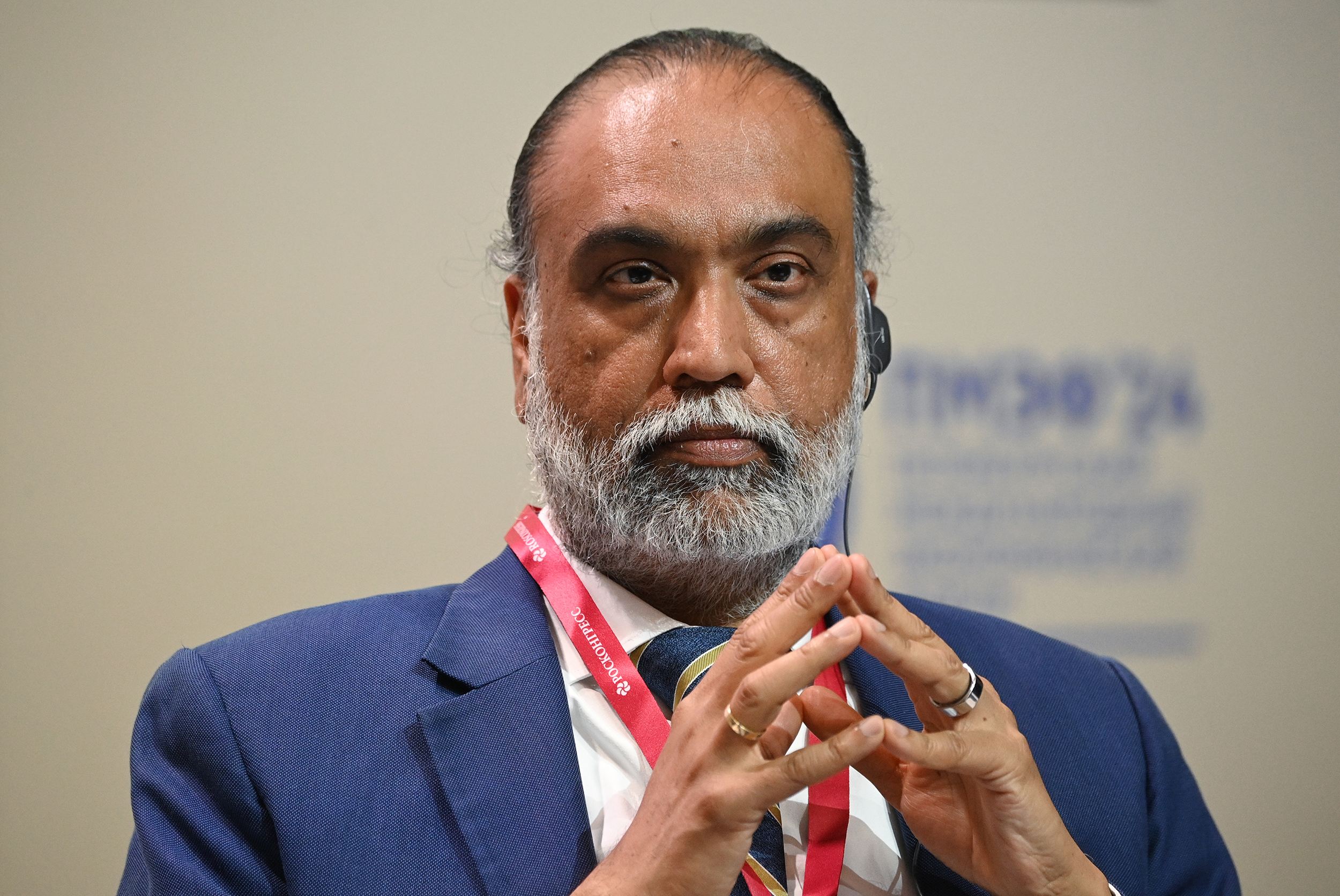
Ahead of the 2nd Global Digital Forum, Amandeep Singh Gill, UN Under-Secretary-General and Special Envoy for Digital and Emerging Technologies, addressed the key challenges facing the United Nations regarding the development and regulation of digital technologies and artificial intelligence.
– You have devoted considerable attention to the impact of AI on the modern world. What is your outlook for developments in this area over the next 5–10 years?
Amandeep Singh Gill: AI, robotics and autonomous systems are advancing at an extraordinary pace. It is difficult to predict where we will be in five years, let alone ten.
I am optimistic that we can harness these technologies responsibly to address some of society's greatest challenges. However, the compute, data, energy, talent and investment required to develop advanced AI systems remain concentrated in a small number of countries and companies. Recent incidents, including security breaches and unexpected behaviour by AI agents, should serve as early warning signs that stronger governance, accountability and safeguards are essential.
One of our biggest challenges will be ensuring that AI does not deepen existing inequalities. My hope is that within the next decade, all countries and communities will have the minimum capabilities needed to develop AI solutions in their own languages and for their own priorities.
In future, I see AI as a coach and partner to people rather than a replacement for them, augmenting human capabilities, increasing productivity and helping us solve problems more effectively.
– You have also repeatedly highlighted the need to establish an appropriate legal and regulatory framework for AI. How do you assess the current state of affairs in this area? Which countries have made the most progress in developing such frameworks, and what do you see as the prospects for reaching a global standard under the auspices of the United Nations?
Amandeep Singh Gill: I believe we are moving in the right direction on AI governance, but not nearly fast enough. Important progress has been made in a number of jurisdictions, including through the European Union's AI Act, China’s regulation on emotional dependence on AI and other national initiatives. Yet the real test will be whether all countries, not just the technological leaders, have a meaningful voice in shaping the rules, norms and institutions that govern AI.
To achieve that, we need three things: science, dialogue and capacity.
First, we need independent scientific evidence to help policymakers understand AI's opportunities, risks and societal impacts. That is why the United Nations hosts the Independent International Scientific Panel on AI, bringing together experts from across regions, disciplines and sectors to provide a shared basis of evidence for policymakers to work off of.
Second, we need inclusive dialogue. AI governance cannot be developed by a few governments alone. All governments, representative voices from industry, researchers, civil society, especially from developing countries, must have a seat at the table. In May next year, the second Global Dialogue on AI Governance will provide a platform to build trust, understanding and common approaches across different perspectives and interests.
Third, we need capacity. If large parts of the world lack the technical, institutional and regulatory capabilities to engage, global governance risks becoming governance by a few. Closing AI divides is therefore not only a development imperative, but a governance imperative. The Secretary-General's proposal for a Global Fund on AI Capacity-Building starting at $3 billion reflects the scale of that challenge. Alongside, pragmatic and networked efforts are needed; the UN-supported Global AI Capacity Development Network is an example.
A single global AI regulatory regime is unlikely in the near term. However, I believe it is both realistic and necessary to build global agreement around shared principles, minimum safeguards and mechanisms for international cooperation on this technology. The United Nations is uniquely placed to help achieve that because of its universal membership and convening power. We should move forward resolutely and collaboratively step by step.